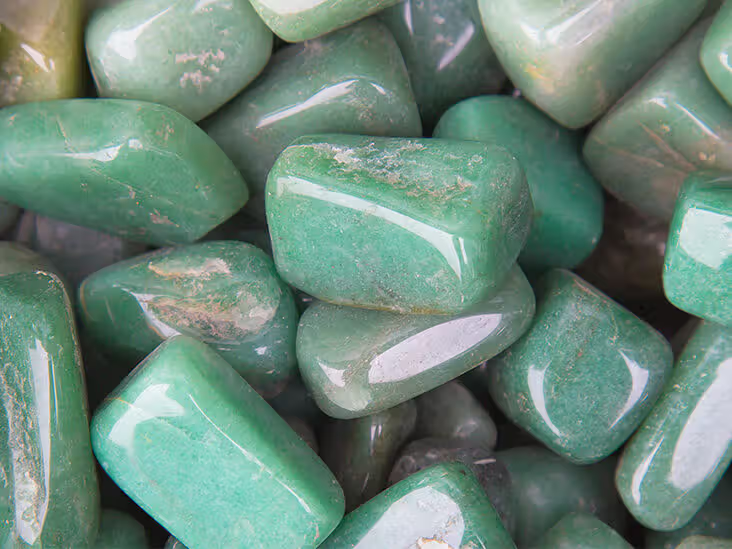
From ancient dynasties to modern identity
For centuries, jade has existed at the intersection of beauty, spirituality, politics, and power. Long before gemstones became associated primarily with luxury, jade occupied a different category entirely, one that extended beyond ornament and into ideology. It was not simply admired. It was revered, protected, traded, buried, inherited, and, at times, fought over.
Unlike diamonds, whose value is often tied to brilliance and rarity, jade derives much of its significance from meaning. Its importance has never depended solely on appearance. Instead, it has been shaped by what cultures projected onto it: protection, virtue, immortality, harmony, authority.
And perhaps that is why jade continues to hold such unusual cultural weight even today. Because while trends change around it, jade has never functioned purely as fashion. It functions as an identity.
A stone associated with authority long before luxury
Across multiple regions of Asia, jade was historically tied not only to wealth, but to governance, morality, and cosmic order. In ancient China in particular, jade occupied a position that extended far beyond decorative use. Confucian philosophy associated the stone with virtues such as wisdom, integrity, restraint, and balance, transforming it into a material that symbolized ideal character as much as social status. Its value became institutional.
Jade objects were incorporated into ceremonies, imperial rituals, burial practices, and systems of exchange. Emperors commissioned jade carvings not simply because they were beautiful, but because the material itself carried political and spiritual significance. Possessing jade meant proximity to power — and, in many cases, legitimacy within systems of authority. The stone became inseparable from hierarchy.

Why jade inspired conflict
The historical demand for jade was not limited to ornamentation, which is precisely why access to it became so contested. Certain forms of jade, particularly highly valued jadeite from regions such as present-day Myanmar, were rare and difficult to obtain. Trade routes developed around it. Kingdoms and dynasties sought control over its movement. Entire economies became tied to its extraction and circulation.
Unlike commodities valued only for practical use, jade accumulated symbolic importance as it moved through society. Ownership reflected influence. Gifting jade reinforced alliances. Collecting it became an expression of cultural refinement and political standing. The stone was never neutral. Its movement through history mirrored the movement of power itself.
More than decoration
Part of what makes jade culturally distinct is that it has rarely been treated as purely aesthetic. In many traditions, jade is believed to carry protective or spiritual properties. It is worn close to the body not only for appearance, but for what it is thought to represent or preserve. Families pass down jade bracelets and pendants across generations, attaching memory and continuity to the material itself.
This relationship changes how jade is valued. A diamond may be evaluated according to measurable criteria: clarity, cut, carat. Jade, by contrast, is often evaluated through a combination of texture, translucency, color, cultural understanding, and emotional resonance. Its worth cannot always be separated from context. To some, a piece of jade is jewelry, to others, it is inheritance.

The complexity of color and meaning
Western audiences often simplify jade into a single image: smooth green stone, polished and decorative. In reality, jade exists across a wide spectrum of colors and qualities, each carrying different cultural associations and market values.
Imperial green jadeite remains among the most prized due to its intense saturation and translucency, but lavender, white, yellow, black, and icy varieties also hold significance. Texture matters as much as color. So does internal structure. The most valued jade appears almost illuminated from within, possessing depth rather than surface brightness. This complexity contributes to jade’s enduring mystique. It resists simplification, and unlike many modern luxury materials, jade often requires cultural literacy to fully understand its value.
Jade in modern identity
What makes jade particularly interesting today is the way it continues to evolve without losing its historical weight. For younger generations across Asia and within global diasporas, jade has increasingly become part of a broader conversation around cultural identity. Pieces once associated primarily with older family members or ceremonial use are now being reinterpreted through contemporary styling.
Jade pendants appear layered with modern gold chains. Bangles are worn alongside minimalist tailoring. Traditional carvings coexist with contemporary silhouettes. This shift is not a rejection of heritage, but a recontextualization of it. The meaning remains, but the presentation changes.
Why jade still signifies power
Even today, jade continues to communicate forms of status and influence, though the nature of that power has evolved. Historically, jade symbolized proximity to imperial authority and elite structures. In contemporary settings, its significance is often more layered. It may represent wealth, certainly, but also cultural literacy, family continuity, and connection to heritage. Its power lies partly in the fact that it cannot be fully separated from history.
To wear jade is rarely a purely aesthetic decision. It often implies relationship to culture, to ancestry, to tradition, or to identity itself. And unlike trends that rely on novelty, jade derives strength from endurance.
A material that resists trend cycles
One reason jade has survived across centuries while other materials faded in relevance is that it operates outside the logic of trend-based consumption. It does not need reinvention in order to remain meaningful. Its value has always been cumulative, built through repetition, inheritance, and historical continuity. A jade bracelet worn today may carry references that extend across generations, connecting the present wearer to systems of meaning far older than contemporary fashion itself. That kind of permanence is increasingly rare. Especially in a culture built around acceleration.
Jade has never been simply a stone. It has functioned as currency, protection, inheritance, political symbol, spiritual object, and marker of identity, sometimes all at once. Empires fought over it not because it sparkled most brightly, but because it carried something more enduring: meaning. And perhaps that is why jade still holds power today. Not because history remains frozen around it, but because the stone continues to evolve alongside the people who wear it.





 Line
Line
 WhatsApp