
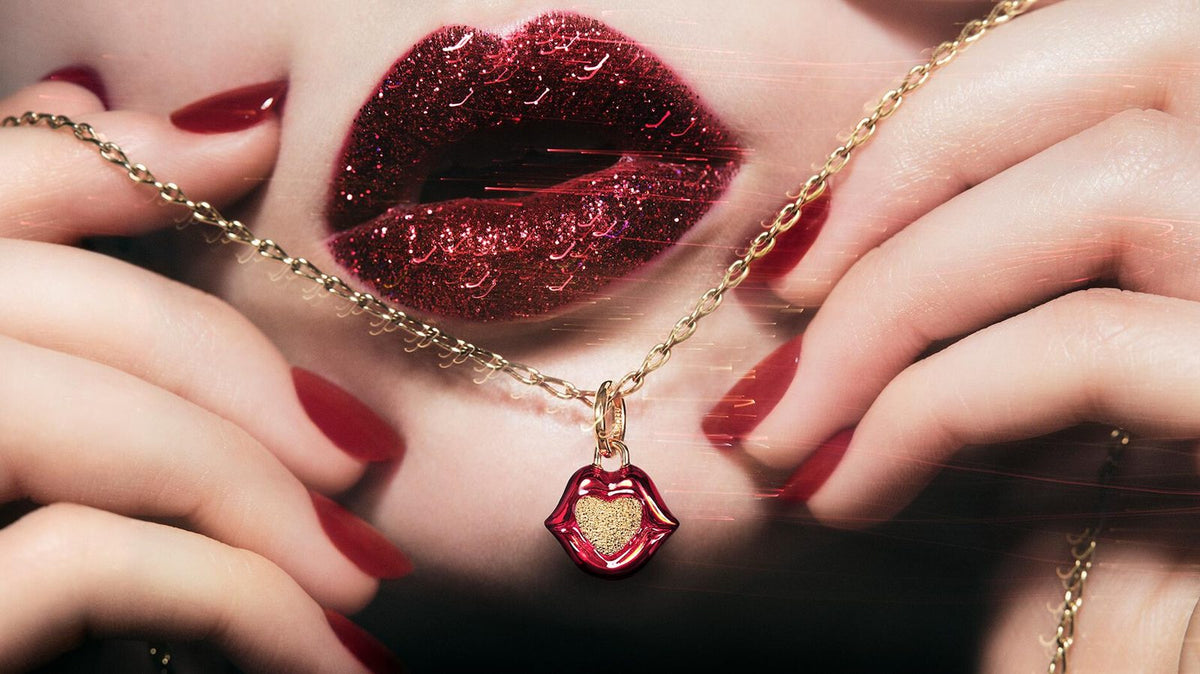
A price tag shows the metal, the stone and the name — not where the gold came from or what it left behind.
The stone is only part of the price
The price you see
A price tag on fine jewelry usually tells you a few things: the metal, the stone, perhaps the carat weight and the name of the house. It does not tell you where the gold came from, how much energy it took to produce, or what it left behind.
This matters more now than it did a few years ago. Gold reached an all-time intraday high of $5,589 per ounce on January 28, 2026. Jewelers have passed at least part of that cost on. According to the luxury pricing tracker PurseBop, Tiffany & Co. raised U.S. prices by roughly 3 to 11 percent in October 2025, then raised them again on January 20, 2026, by up to nearly 15 percent on some designs. The steepest increases were on pieces with high precious-metal content.
So when you buy fine jewelry today, a large and growing share of what you pay is for the metal itself. That makes it worth asking what that metal actually costs, beyond the price.
The carbon inside a gold ring
Gold's environmental footprint depends heavily on where it comes from.

A 2020 life cycle study published in The International Journal of Life Cycle Assessment measured the impact of recycling high-value gold scrap, such as old jewelry and coins, at state-of-the-art refineries in Germany. It found that recycling produced about 53 kilograms of CO₂-equivalent per kilogram of gold. By comparison, the common datasets the researchers cited put mined gold at about 16 tonnes of CO₂-equivalent per kilogram. The authors concluded that buying gold from high-standard recycling facilities, with a reliable origin of the recycled material, is about 300 times better than primary production.
To put that into the scale of a single piece: 18-karat gold is 75 percent pure gold, so a five-gram 18-karat ring contains 3.75 grams of gold. Using the study's figures, that gold would correspond to roughly 60 kilograms of CO₂-equivalent if newly mined, and about 0.2 kilograms if recycled from high-value scrap.
Industry data offers some context on scale. The World Gold Council reports that gold production's total emissions are significantly smaller than those of other major mined products such as steel, aluminum and coal. Measured per dollar of value, gold has among the lowest greenhouse gas emissions of the main mined products. But for the person buying a single ring, the difference between mined and recycled gold is large.
The pollution you can't see

Carbon is not the only cost. Artisanal and small-scale gold mining often uses mercury to separate gold from ore. According to the UN Environment Programme's Global Mercury Partnership, the sector is responsible for an estimated 37 percent of the roughly 2,200 tonnes of mercury released each year to air, water and land. That makes it the largest single source of human-made mercury pollution. Virtually all of the mercury the sector uses ends up in the environment.
UNEP notes that mercury does not break down in the environment. It can build up and pass along the food chain, where it can damage the nervous, digestive and immune systems of animals and people.
Estimates of how much of the world's gold comes from this sector vary. UNEP's Global Mercury Partnership puts it at 12 to 15 percent, while the U.S. Environmental Protection Agency says up to 20 percent.
Where the world's gold comes from

According to the World Gold Council, total gold supply reached 5,002 tonnes in 2025, the highest in its data series going back to 1970. Of that:
- mine production accounted for an estimated 3,672 tonnes
- recycling supplied 1,404 tonnes, its highest level since 2012
Gold is almost indestructible, so nearly all of it ever mined still exists in some form. The World Gold Council estimates that about 219,891 tonnes of gold were above ground at the end of 2025. Recycling is also the part of supply that responds most quickly to price: when gold is expensive, more people sell old jewelry, and more of it returns to the market.
The limits of "recycled"
Recycled gold has a much smaller footprint, but it does not remove mining from the picture. Even in a record year for recycling, about three-quarters of the world's gold supply in 2025 was newly mined.
The 2020 study's figures also apply to a specific kind of recycling: high-value scrap processed at modern German refineries. The study found that recycling gold from electronic waste had a considerably higher footprint, close to one tonne of CO₂-equivalent per kilogram. That is still far below mining, but much higher than recycling old jewelry. "Recycled" is not a single standard, and it is fair to ask a jeweler where their recycled gold comes from and how it is refined.
The rest of the price
The metal is only one layer. Stones carry their own environmental history, which we explored in What a diamond mine leaves behind after the stone is gone. The people who cut, set and finish each piece are part of the price too, and their pay has not always kept pace, as we reported in Artisan wages haven't kept up. Beyond that, the price covers design, retail and the name on the box.
What this means for buyers
Fine jewelry has never been cheaper to make responsibly than it is to make carelessly. It has simply been easier not to ask. With gold at historic prices, more of every purchase goes into the metal, and the metal's origin makes a measurable difference to its footprint.
The most useful questions a buyer can ask are simple. Is the gold recycled, and from what source? If it is mined, where and how? And is there anything already in your own jewelry box that could be remade instead?
A piece of jewelry is priced by what can be measured: weight, purity, carats, name. Its real cost also includes what cannot be seen at the counter: the energy, the chemicals and the landscapes behind the metal. The price tag will not tell you that part. But you can ask.
Related reading: Sustainability and traceability: from "beauty" to "responsibility" and Fast fashion came for jewelry too.







 Line
Line
 WhatsApp