Consumers have stopped asking only whether a piece is beautiful, and started asking where it came from.
The transformation of value from “beauty” to “responsibility” — a research-based marketing analysis.
Introduction
Throughout the twentieth century, the jewelry industry placed primary emphasis on “visible value” — the weight of gold, the purity of metals, the size of diamonds, and the rarity of gemstones. The value of a product was largely determined by its physical characteristics and its ability to communicate the social status of its owner.
At the beginning of the twenty-first century, however, a significant transformation emerged. Consumers began to question the “origins” of the products they purchased rather than focusing solely on the products themselves.
- From which mine did the gold originate?
- Were the workers compensated fairly?
- Were the gemstones extracted without violating human rights?
- How much environmental damage was caused by the production process?
These questions are no longer matters of concern only to environmentalists or human-rights organizations. They have become influential factors in the purchasing decisions of a growing number of consumers, particularly among younger generations.
The concepts of Sustainability and Traceability are therefore no longer merely ethical guidelines. They have become two of the most important competitive factors in the global jewelry industry.
2.1 The meaning of sustainability in the jewelry industry
The term sustainability is commonly understood as the ability to maintain systems and resources over the long term. Within the context of the jewelry industry, however, its meaning extends far beyond environmental conservation.
Most international organizations explain sustainability through the framework of ESG — Environmental, Social, and Governance — which encompasses three principal dimensions.
Environmental
- Reducing the environmental impact of mining
- Managing wastewater
- Reducing greenhouse-gas emissions
- Using clean energy
- Recycling precious metals
Social
- Protecting workers’ rights
- Prohibiting child labor
- Ensuring workplace safety
- Sharing economic benefits with local communities
- Respecting the rights of Indigenous peoples
Governance
- Maintaining supply-chain transparency
- Preventing corruption
- Disclosing relevant information
- Establishing traceability systems
- Obtaining certification from independent organizations
Sustainable jewelry therefore does not simply mean jewelry made from recycled materials. It encompasses the entire process, from mining, transportation, manufacturing, and distribution to the disposal or recovery of a product at the end of its useful life.
2.2 Why consumers are becoming more concerned about origins
The transformation of consumer behavior has not occurred by chance. Rather, it is the result of broader changes in global society over the past three decades.
Access to information
The growth of the internet and social media has enabled information about the effects of the mining industry to circulate rapidly. Images of vast open-pit mines, destroyed forests, and affected communities have encouraged consumers to connect their purchasing decisions with the consequences hidden behind finished products.
Many consumers no longer ask only: “Is this piece of jewelry beautiful?” They also ask: “Who or what has been affected in the process of creating it?”
A shift in values
Research into consumer behavior indicates that Millennials and Generation Z are more likely than previous generations to purchase products from brands that demonstrate clear social and environmental commitments.
For younger consumers, purchasing a product is not merely an economic exchange. It is also a reflection of personal values and social responsibility. Consumption has therefore become a form of expressing one’s ethical identity.
Brand trust
In an era in which information can be verified with increasing ease, transparency has become a highly valuable corporate asset.
Consumers are more likely to trust brands that can clearly explain:
- Where their raw materials originate
- Who produced the jewelry
- Which standards were applied
- Which organizations certified the materials or processes
Brands that cannot answer these questions may lose credibility, even when their products are of exceptionally high quality.
2.3 Traceability: from the mine to the consumer
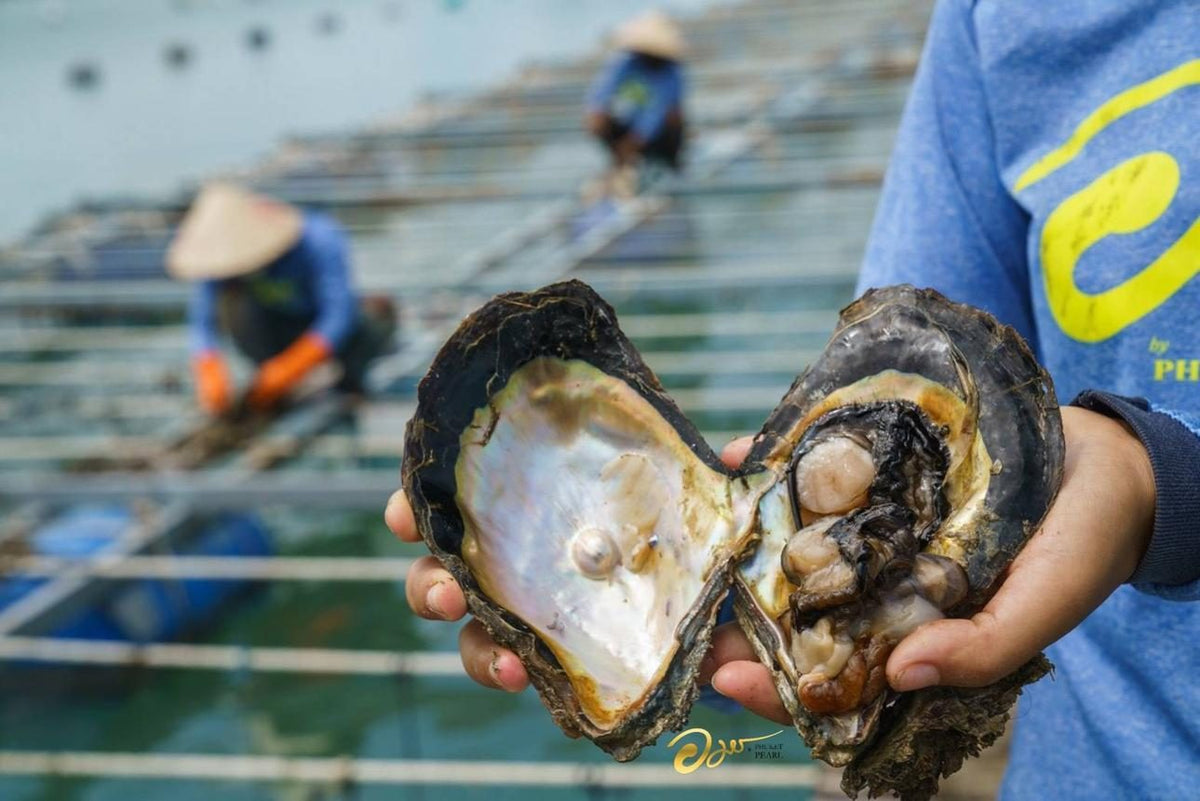
One of the fastest-growing concepts in the jewelry industry is traceability, or the ability to trace a material or product back through every stage of its journey.
A traceability system may record information such as:
- The country of origin of the gold
- The mine from which it was extracted
- The refinery or smelting facility
- The manufacturing factory
- The artisan or craftsperson responsible for assembling the piece
- The wholesaler
- The retail store
When all this information can be connected, consumers gain greater confidence that the products they purchase have been legally sourced and produced in accordance with recognized ethical standards.
In recent years, digital technologies such as blockchain, Digital Product Passports, and QR-code systems have made traceability more accessible and efficient. Information from each stage of production can be recorded, connected, and verified throughout the supply chain.
2.4 Sustainability is not limited to environmental protection
One common misunderstanding is the assumption that sustainability concerns only the reduction of pollution.
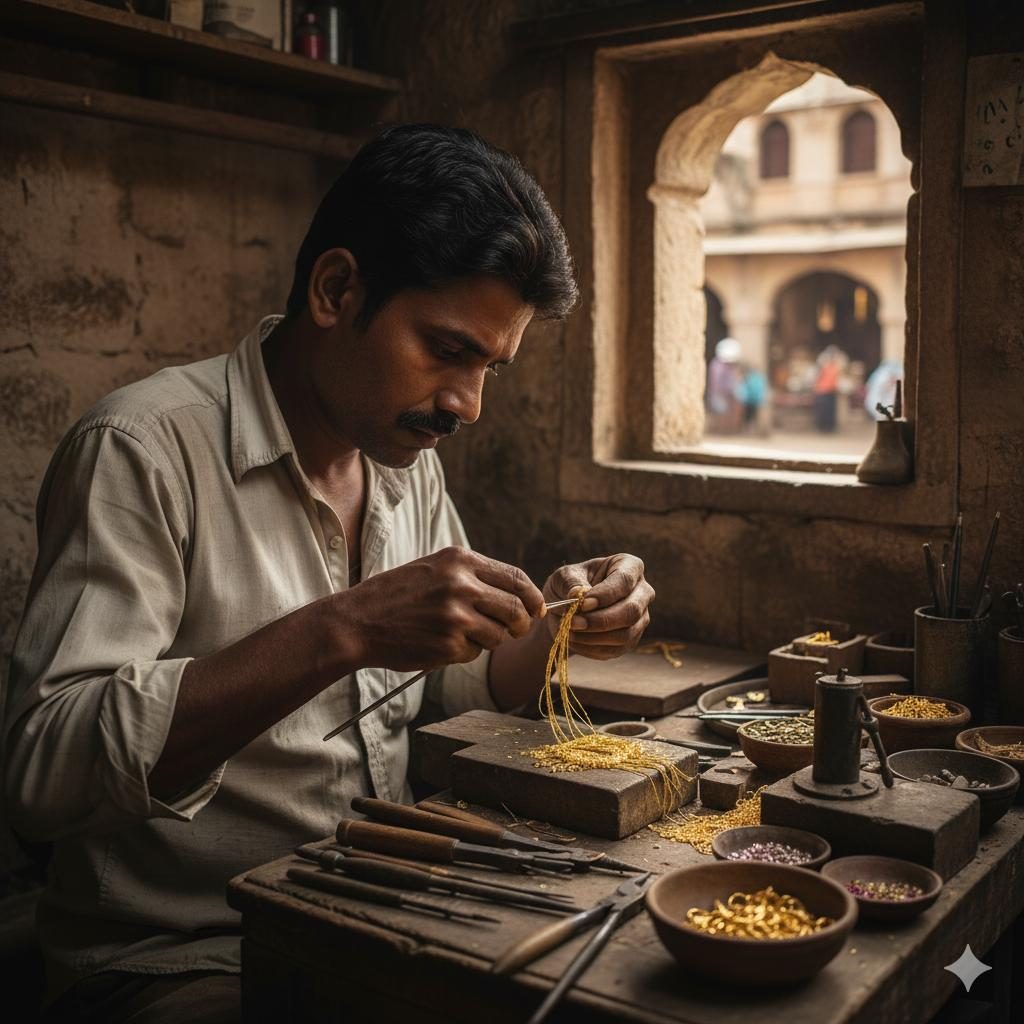
In reality, sustainability also includes the preservation of local knowledge, traditional craftsmanship, and artisan communities.
When industrial production causes traditional goldsmiths to lose their livelihoods, it may reduce production costs, but it can also result in the disappearance of cultural heritage accumulated over hundreds of years.
This broader understanding has encouraged many consumers to support community-based products, handicrafts, and small enterprises that continue to preserve traditional knowledge. Such consumers regard purchasing not merely as acquiring an object, but as supporting the long-term survival of local economies and cultural systems.
2.5 The circular economy and the future of jewelry
Another important development is the adoption of the principles of the circular economy.
Instead of following a linear model of produce–use–discard, the jewelry industry is beginning to create new systems in which materials and products remain in circulation for as long as possible.
Examples include:
- Buying back old gold for recycling
- Reusing diamonds taken from older jewelry
- Designing jewelry that can be repaired
- Redesigning or transforming existing pieces instead of purchasing new ones
- Returning metal scraps to the production process
This approach not only reduces the consumption of natural resources but also responds to consumers who wish to preserve the emotional value of existing jewelry. An ancestral wedding ring, for example, may be transformed into a pendant or bracelet for a younger generation.
Through such redesign, the material remains in circulation while its personal and familial significance is preserved.
2.6 Case studies from global brands
A growing number of international jewelry manufacturers have shifted their communication strategies away from an exclusive emphasis on luxury. Instead, they are building consumer confidence through greater supply-chain transparency.
Common approaches include:
- Disclosing the countries of origin of raw materials
- Using recycled gold in selected collections or across all collections
- Obtaining certification from independent organizations concerned with responsible mining
- Publishing annual sustainability reports
- Investing in mine-site restoration projects and supporting producer communities
These practices demonstrate that transparency has become an integral component of brand value rather than merely an activity associated with corporate social responsibility.
2.7 Marketing opportunities for Thailand
Thailand is one of the world’s important centers for gemstone and jewelry production. The country possesses highly skilled artisans, extensive manufacturing networks, and an international reputation for gemstone cutting and treatment.
Future competitiveness, however, will not depend solely on production costs. It will increasingly depend on the ability of businesses to establish credibility through verifiable information.
Potential strategies for Thai jewelry businesses include:
- Establishing systems to trace the origins of gold and gemstones
- Documenting the stories of the artisans responsible for creating individual pieces
- Using environmentally responsible packaging
- Developing programs to buy back and recycle old jewelry
- Communicating the value of Thai craftsmanship as a form of cultural heritage
For small and medium-sized enterprises in particular, connecting products with local communities and traditional knowledge can create meaningful differentiation from competitors whose strategies are based primarily on price.
2.8 Strategic analysis
In the past, jewelry businesses may have regarded sustainability as an additional “cost” of conducting business. Today, however, it is increasingly understood as an “investment” capable of generating long-term value.
Supply-chain transparency can reduce reputational risk, strengthen consumer confidence, and provide access to markets that place significant importance on environmental standards and human rights.
Moreover, the ability to communicate stories about the origins of materials, producer communities, and creative processes can increase the emotional value of a product.
Jewelry therefore no longer competes solely through price. It also competes through the “value” perceived by consumers.
A traceable piece of jewelry can offer several interconnected forms of value:
- Material value
- Ethical value
- Cultural value
- Emotional value
- Documentary value
Together, these dimensions allow a product to occupy a more distinctive position in the market than one defined only by weight, size, or rarity.
Conclusion
Sustainability and traceability are not temporary trends. They represent a structural transformation within the global jewelry industry — from an era in which consumers were concerned primarily with “what can be seen” to one in which they also consider “what lies behind the product.”
In the future, the ability to answer the question “Where did this piece of jewelry come from, and how was it made?” will become as important as answering “How beautiful is this piece of jewelry?”
For Thai jewelry businesses, the challenge is therefore not limited to producing high-quality products. It also involves establishing systems that allow consumers to trust that the value of each piece begins at the source of its materials, continues through the hands of skilled artisans, and reaches the wearer through a process characterized by transparency and responsibility.
Direction for Chapter 3
The next chapter, “Lab-Grown Diamonds and Future Materials,” will examine the major transformation taking place within the diamond industry. It will explore production technologies, the effects of laboratory-grown diamonds on the value of natural diamonds, changing consumer behavior, and the strategies jewelry brands should adopt in a market where “rarity” is no longer the only foundation of value.
Related reading: The hands behind the gem and What a diamond mine leaves behind.
อ่านบทความนี้เป็นภาษาไทย: ความยั่งยืนและแหล่งที่มาที่ตรวจสอบได้






 Line
Line
 WhatsApp