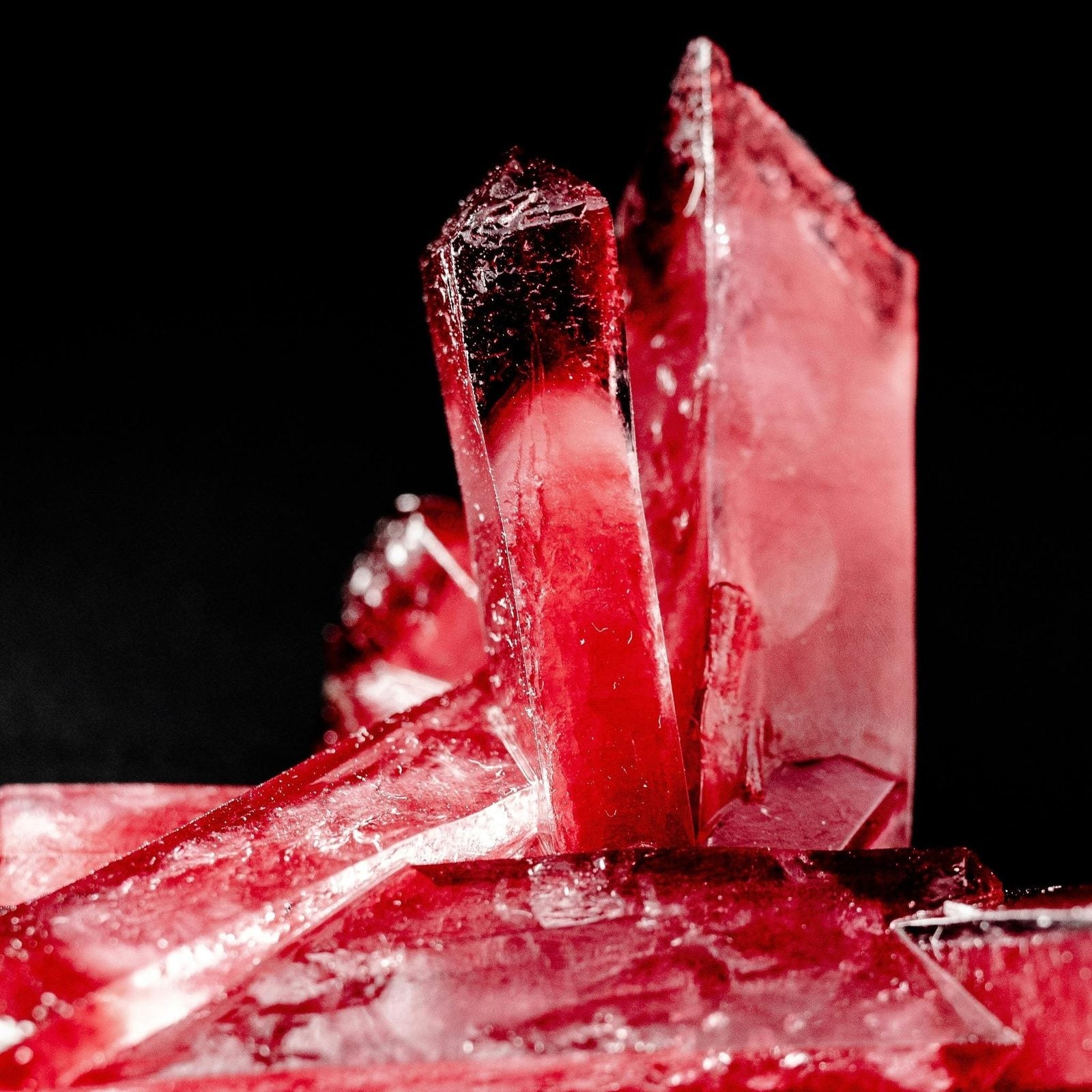
Long before gemstones became luxury objects, red stones functioned as forms of symbolic defense.
The hidden language of color across cultures
For much of modern jewelry culture, gemstones are discussed primarily in terms of aesthetics. Color is treated as preference, a matter of taste, coordination, or visual appeal. Red stones, in particular, are often associated with intensity, romance, or luxury, their value framed through saturation and rarity rather than meaning. But historically, red carried a far more complex significance.
Across cultures and centuries, red stones were rarely viewed as decorative alone. They were believed to protect the body, repel danger, preserve vitality, and shield the wearer from forces that could not always be explained. Their value came not only from appearance, but from what people believed they could do. Long before gemstones became luxury objects, they functioned as forms of symbolic defense.
The color of blood, life, and survival
The power associated with red begins with the color itself. Across civilizations, red has consistently occupied a unique psychological and symbolic position because of its connection to blood, the most immediate visual marker of life, injury, vitality, and mortality. Unlike softer or more neutral tones, red demands attention. It signals danger and protection simultaneously. This duality gave red unusual cultural weight.
It became associated not only with strength and fertility, but with the ability to guard against harm. In many traditions, wearing red was believed to create a form of spiritual or energetic protection, particularly during moments considered vulnerable: birth, marriage, travel, illness, or transition. When red appeared in jewelry, it carried those associations with it.
Stones believed to hold power
Historically, stones such as ruby, red coral, garnet, and carnelian were often worn not simply because they were visually striking, but because they were thought to possess protective qualities.
Ruby, in particular, occupied an almost mythological status across parts of Asia. Its deep red coloration linked it to vitality and power, while its rarity reinforced the idea that it contained exceptional force. In ancient Burma, warriors were said to wear rubies for protection in battle, believing the stone could shield the body from harm.
Red coral carried similar significance in Mediterranean cultures, where it was frequently used in amulets designed to protect children from illness or evil influence. Carnelian appeared throughout ancient Egypt and the Islamic world, valued not only for ornamentation but for its association with courage, strength, and preservation. These materials were not passive objects. They were treated as active safeguards.
Jewelry as spiritual infrastructure
In many societies, jewelry historically functioned as more than decoration because the body itself was understood as vulnerable. Necklaces, rings, and pendants were often positioned deliberately, placed near areas associated with breath, pulse, fertility, or spiritual energy. Stones were selected not simply according to beauty, but according to the type of protection they were believed to provide.
Red stones became especially important because they occupied a symbolic space between visibility and defense. They signaled presence outwardly while also serving inwardly as forms of reassurance or ritual protection. In this sense, jewelry operated almost like spiritual infrastructure — objects integrated into daily life as quiet systems of safeguarding. The aesthetic and symbolic functions were inseparable.
The role of red in Asian traditions

Across many parts of Asia, red continues to hold strong associations with protection, prosperity, and luck. In Chinese culture, red is linked to celebration, fortune, and the warding off of negative energy. It appears prominently during weddings, festivals, and major life transitions, often through clothing, decoration, and jewelry alike. Gemstones with red tones naturally became extensions of this symbolic system.
Similarly, in South Asian traditions, red occupies a central role in marriage rituals and ceremonial adornment. Rubies and garnets often appear alongside gold jewelry not only because of visual richness, but because the combination itself carries associations with vitality, strength, and auspiciousness. The meaning of the color extends beyond fashion. It becomes embedded within cultural structure. Pieces like the Laal Raag necklace sit directly in that lineage.
When symbolism became luxury
Over time, as gemstone markets globalized and jewelry became increasingly commercialized, the symbolic meanings attached to stones began to fade from mainstream visibility. Rubies became associated with rarity and investment. Red gemstones were marketed through luxury language rather than spiritual or cultural significance. The focus shifted toward measurable qualities: color saturation, origin, clarity, while the older systems of meaning became secondary. But they never disappeared entirely.
In many cultures, people still inherit, gift, and wear red stones during specific life moments because the symbolism remains active beneath the surface of modern styling. Even when not consciously articulated, these associations continue to shape how red gemstones are perceived emotionally. The language survives, even when it is no longer openly spoken.
Aishwarya Rai Bachchan: red as ceremonial power

Public figures often reinforce these symbolic traditions, particularly in ceremonial or cultural contexts where jewelry carries layered meaning. Aishwarya Rai Bachchan has frequently appeared in jewelry styling that incorporates deep red gemstones alongside traditional gold elements, particularly during formal or ceremonial appearances. In these contexts, the stones do not function merely as accents of color. They reinforce a broader visual language tied to strength, prosperity, femininity, and continuity. The impact comes not only from visual richness, but from cultural recognition. The color itself already communicates.
Why red still feels emotionally charged
Even outside traditional frameworks, red gemstones continue to evoke unusually strong emotional reactions. Part of this comes from biological perception. Red naturally attracts attention more quickly than many other colors. But part of it also comes from inherited symbolism, cultural associations absorbed over generations, even when no longer consciously acknowledged.
A ruby rarely feels neutral, neither does garnet or red coral. The intensity of the color creates emotional immediacy, which may explain why red stones continue to appear during moments associated with significance, transition, or visibility. Their symbolism adapts, but it persists.
Beyond decoration
Modern jewelry culture often separates aesthetics from meaning, treating symbolism as optional rather than foundational. But historically, the two were deeply intertwined. A stone was not chosen only because it looked beautiful. It was chosen because it represented something necessary: protection, strength, vitality, luck and survival. Red stones carried these meanings visibly, making them among the most symbolically charged materials in jewelry history. Our cultural collection traces some of those threads.
The history of red stones reveals something larger about jewelry itself. For most of human history, adornment was never purely decorative. Jewelry functioned as communication, ritual, identity, and protection all at once. Stones were valued not only for rarity or appearance, but for the meanings cultures attached to them. And among all colors, red perhaps carried the greatest emotional weight. Not simply because it was beautiful, but because people believed it could keep them safe.
Related reading: The stone empires fought over and The Journey of Ruby and Sapphire.




 Line
Line
 WhatsApp