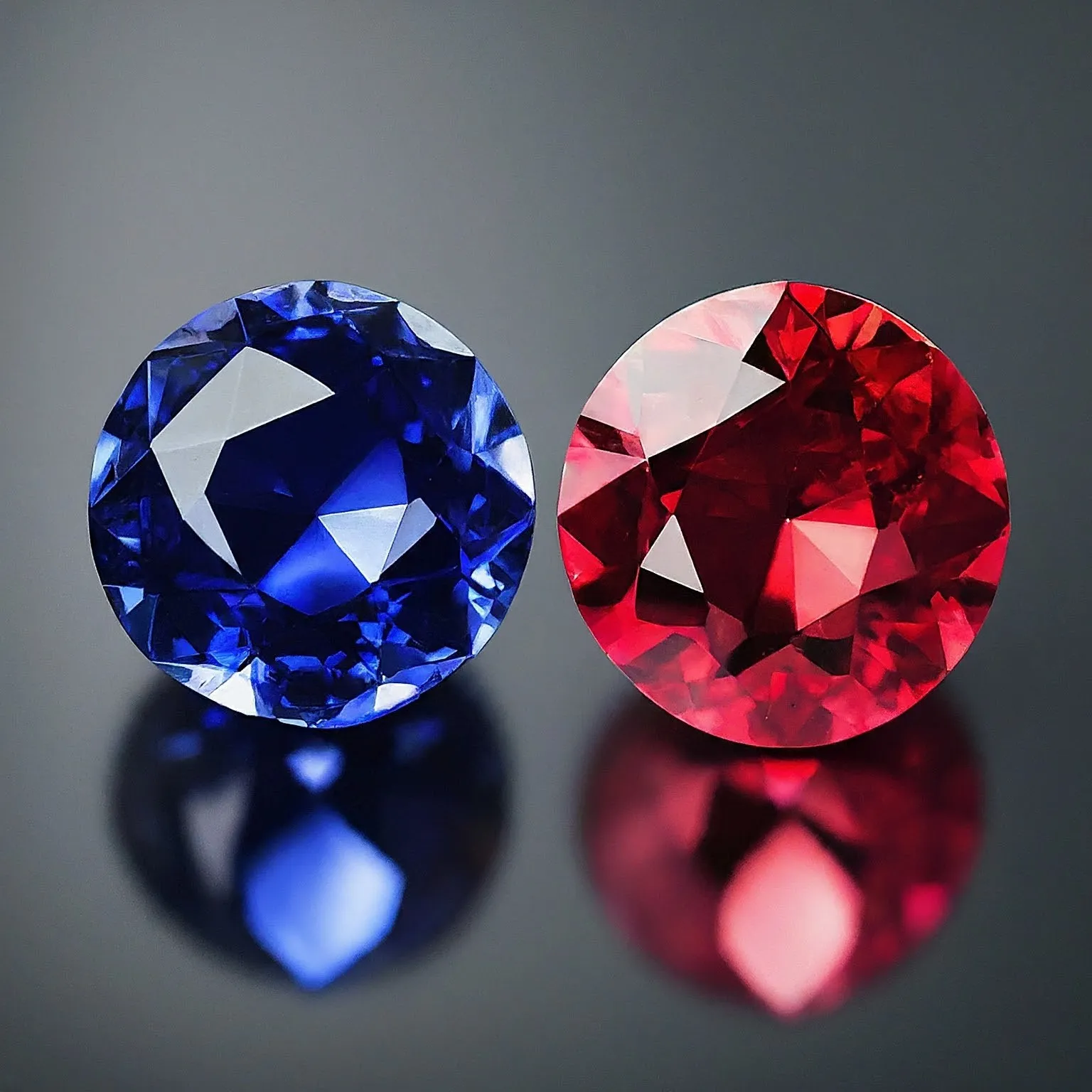
Two Hues of Beauty Born from the Same Stone
In the deep darkness beneath the Earth’s crust, under immense pressure and searing heat, atoms of aluminum and oxygen slowly intertwine over millions of years. From this silent alchemy of the planet emerges a crystal—clear and hard as forged steel—corundum, which gleams in two sacred lights: as ruby when touched by traces of chromium, and as sapphire when kissed by iron or titanium.
When the shifting crust and the breath of volcanoes push these crystals upward, and rivers carry them through valleys and deltas, early humans discovered them glimmering among grains of sand—red as blood, blue as the heavens—like divine gifts scattered across the Earth.
From the ruby valleys of Mogok in Myanmar, across the jewel island of Sri Lanka, to the ancient plains of India, these twin gems have crowned kings, adorned priests, and sanctified rituals of faith. They are not merely stones of beauty, but mirrors reflecting the spirit of civilization—the eternal human yearning for light, truth, and immortality. In the realm of gemstones, few embody the union of nature’s artistry, cultural belief, and scientific wonder as perfectly as Ruby and Sapphire.
Different in color yet born of the same mineral, distinct in meaning yet rooted in one essence—these are the twin flames of eternal light, forever shining in the human heart across the ages.
The Science of Corundum: Crystals of Earth and Light

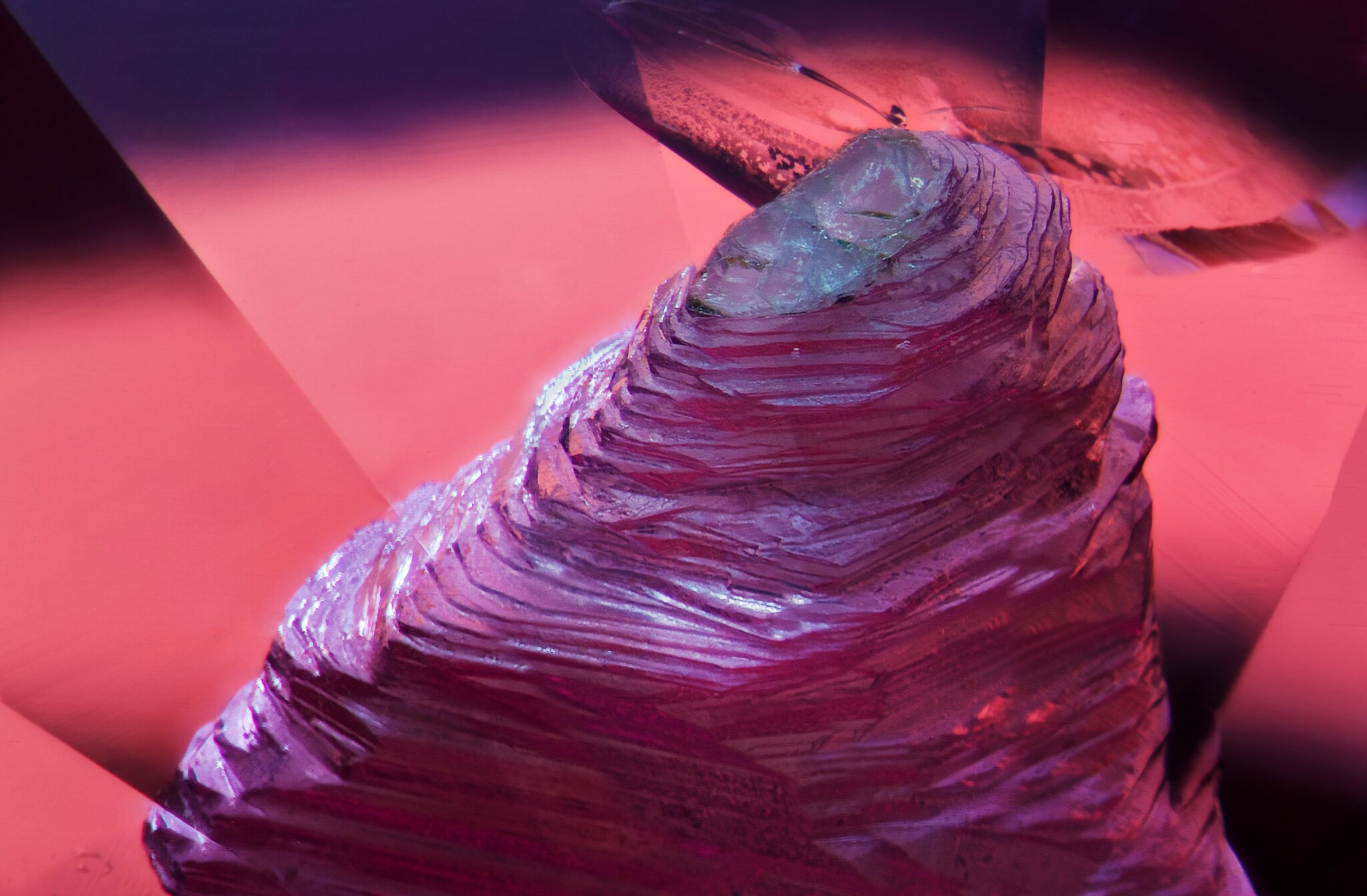
Image : P04 - 'Sapphire Mountain' - Padparadscha sapphire (c) E. Billie Hughes - Lotus Gemology.jpg (2048×1343)
Long before life ever walked upon the planet’s surface, the early Earth was a cauldron of creation — molten seas, shifting crusts, and volcanic storms beneath the silence of space. Amid that ancient furnace, beauty began to take shape: a quiet union of aluminum and oxygen under unimaginable pressure and heat.
From this slow alchemy of the deep Earth emerged a crystal clear as ice yet hard as tempered steel — corundum, the luminous mineral that would one day become ruby and sapphire.
This mineral is one of the Earth’s most enduring masterpieces. With a hardness of 9 on the Mohs scale, second only to diamond, corundum resists time, friction, and the forces that erode nearly everything else. Each crystal is a survivor — a fragment of the planet’s deep history, awaiting discovery by human hands.
⚗️ Chemical Composition
Corundum is aluminum oxide (Al₂O₃), born in geologic environments where silica is scarce but pressure and heat are immense.
In those depths — often exceeding 1,000°C — the mineral crystallizes slowly, atom by atom, over millions of years.
Every gem is thus a record of patience, a frozen breath of the Earth’s fiery heart.
🪨 Geological Origins
1. Metamorphic Origin:
When aluminum-rich sedimentary rocks such as shale or limestone are transformed by heat and pressure, they metamorphose into marble or gneiss. At the junctions of these layers, corundum forms — sometimes clear enough to become gem-quality.
Many of the famed Burmese rubies were born in such marble-rich terrains, their crimson glow forged by tectonic fire.
2. Igneous Origin:
In contrast, some sapphires crystallize within basaltic and alkaline igneous rocks, cooled from molten magma infused with iron and titanium — the elemental artists that paint the blue of the heavens.
The sapphires of Australia and Madagascar are children of such volcanic processes.
🌈 The Birth of Color — The Eyes of Elements
Within corundum, color is not mere appearance; it is the language of metal ions speaking through light.
-
The red of Ruby arises from chromium (Cr³⁺), which absorbs green and blue wavelengths, leaving a fiery crimson glow.
-
The blue of Sapphire is born from iron (Fe²⁺/Fe³⁺) and titanium (Ti⁴⁺), a union that filters the light of day into celestial tones.
-
Other trace elements — vanadium, manganese, or magnesium — yield yellow, pink, violet, and green varieties, known collectively as “Fancy Sapphires.”
Each hue is more than beauty; it is a geologic signature, a coded memory of the land and its elemental breath.
🔬 Traces of Creation
Under the microscope, corundum reveals its biography. Fine growth zones form concentric rings that record every fluctuation of heat and pressure in the Earth’s crust.
Delicate filaments of rutile — called “silk” — shimmer within the gem, and when light strikes them just right, a celestial pattern emerges: the six-pointed star of asterism seen in “Star Rubies” and “Star Sapphires.”
Such stones are living archives of light — crystallized history captured within atomic lattices.
🔺 The Science of Light
Corundum is more than a mineral; it is the Earth’s chronicle written in light.
Born in darkness, tempered by fire, and revealed by human eyes, it embodies the eternal journey from shadow to radiance.
Every ruby and sapphire is thus not only a gemstone — it is a story of the planet itself: the dialogue between matter and meaning, between the deep silence of geology and the luminous curiosity of humankind.
The Ancient World: Light Born from the Earth into Legend

Image : Ancient Sapphires And Adventures In Ceylon | Gem-A
Long before the language of science gave names to minerals, humankind looked upon the gleam of ruby and sapphire and saw not stones, but living fragments of the divine. Their light became woven into myth, faith, and kingship — glowing symbols of victory, purity, and the fire of life itself.
🇮🇳 India – “Ratnaraj,” the King of Gems
In ancient India, the ruby was revered as Ratnaraj — “The King of Precious Stones.”
The Ratnapariksha, a Sanskrit treatise written around the 6th century CE, described rubies as “drops of the Earth’s blood,” born from the heart of the planet itself. They were believed to embody the energy of the sun and to bestow upon their bearer courage, vitality, and victory in battle.
Kings of the early Hindu kingdoms wore rubies as a mark of divine favor, while priests used them in ritual fires to honor Surya, the sun god. To possess a ruby was to hold a spark of cosmic order — a living ember of creation.
🇱🇰 Sri Lanka – The Island of Ratnadipa
Across the ocean lay Ratnadipa, “The Island of Gems,” known today as Sri Lanka. This tropical land was already famed in Buddhist texts as the dwelling of divine treasures, its rivers yielding stones that seemed to capture starlight.
By the first millennium BCE, Sri Lankan traders were shipping rubies and sapphires along the maritime Silk Route to the Middle East and Rome. To Buddhist monks, sapphires represented clarity of thought and enlightenment, while rubies symbolized compassion and spiritual warmth — two flames of the same truth.
Thus, from the temples of Anuradhapura to the courts of Persia, the gems of Ratnadipa carried not only wealth, but belief.
🇲🇲 Burma – The Valley of Fire and Blood
In the marble hills of Mogok, Myanmar, the Earth performs a miracle of transformation. Under immense pressure, limestone metamorphoses and infuses trace chromium into corundum, turning the crystals a vivid, pulsating red — the legendary “Pigeon’s Blood” rubies that remain unrivaled to this day.
Burmese chronicles tell of warriors who believed that embedding a ruby in their flesh made them invincible to blades. Such myths reflected not superstition, but reverence — an understanding that the gem’s light was life itself, a sacred flame that no weapon could extinguish.
Even now, Mogok’s valleys shimmer with this dual image: fire and blood, both symbols of endurance and spirit.
🏺 Persia and the Ancient West – Stones of the Heavens
To the Zoroastrian priests of ancient Persia, sapphire was the stone of the sky. They believed that the world rested upon a great mountain of sapphire, and that the heavens themselves were blue because they reflected its sacred radiance.
Farther west, the Greeks revered sapphire as the gem of Apollo, god of light and wisdom.
Oracles at Delphi wore sapphire talismans when seeking truth through divine vision, believing the stone could open a pathway between mortal minds and the eternal.
✨ A Tapestry of Faith and Fire
Across continents, from the temples of India to the mountains of Persia, ruby and sapphire transcended geography and language. They became symbols of the two eternal forces that shape human destiny — fire and sky, earth and light, body and spirit.
What began as mere crystals born in the heart of the planet thus became vessels of myth, carriers of prayer, and reflections of humankind’s oldest desire: to hold, within our grasp, a fragment of the divine.
The Middle Ages to the Renaissance: Gemstones of Faith and Power

Image : Ruby Jewelry Through Ages | The Natural Ruby Company
As empires rose and faiths spread across continents, the glow of ruby and sapphire moved from ancient temples into the sanctuaries and thrones of medieval Europe. Where once they symbolized gods and cosmic fire, they now became emblems of divine grace and royal authority — stones that linked heaven and crown, belief and blood.
💎 Ruby – The Blood of Christ and the Flame of Kings
By the 12th century, the ruby’s red fire had found a new meaning in the Christian world.
No longer seen as the blood of the Earth, it became the Blood of Christ, a sign of sacrifice, love, and the eternal light of salvation.
Medieval scholars wrote that “the ruby shines with the fire of charity,” and that it could protect the wearer from evil and despair. Within cathedrals, its crimson glow illuminated reliquaries and crosses; upon the battlefield, knights bore rubies as talismans of courage and divine favor.
In royal courts, rubies adorned crowns, scepters, and rings — the visible pulse of sovereignty. One of the most famous, the “Black Prince’s Ruby”, set in the Imperial State Crown of England, was long thought to be a true ruby and a relic of miraculous power.
Even when later revealed to be a spinel, its legend remained unchanged — a symbol of protection, glory, and the eternal flame of kingship.
🔹 Sapphire – The Stone of Truth and the Heavens
While the ruby burned with earthly passion, sapphire embodied the calm of divine truth.
To medieval theologians, its celestial blue mirrored the vault of heaven — pure, eternal, and incorruptible. The stone became a favored emblem of the Church, representing chastity, wisdom, and fidelity.
Popes and bishops wore sapphire rings as symbols of heavenly authority, and pilgrims believed the gem could guide them safely through storms and temptation.
To wear sapphire was to be encircled by the firmament itself — to carry a piece of the sky upon one’s hand.
During the Renaissance, the sapphire’s reputation deepened. Scholars and artists saw in it not only divine purity but also intellectual clarity — the light of reason shining through the darkness of ignorance.
Thus, while rubies crowned the hearts of kings, sapphires adorned the minds of thinkers and saints.
🏯 Eastern Reflections – The Light Returns to Asia
Meanwhile, in Asia, the same stones glowed in palaces and temples under different names but with equal reverence.
In the kingdoms of Siam, Burma, and China, rubies were worn by monarchs as symbols of life force (prana) and cosmic protection. Buddhist chronicles listed ruby among the “Seven Royal Gems,” while sapphire was revered as the “Sky Jewel” that embodied serenity and insight.
Thus, across the hemispheres, East and West shared an unspoken dialogue — one of color and spirit.
The ruby and sapphire, born of the same mineral heart, came to represent two halves of faith: the flame of devotion and the clarity of truth.
✨ Faith, Power, and Light Intertwined
By the dawn of the Renaissance, these gems had transcended mere ornamentation. They became metaphors of power and revelation, bridging the earthly and the eternal.
Painters rendered the Virgin Mary in robes of sapphire blue; monarchs sealed their reigns with ruby rings; alchemists saw in both stones the dual essence of the cosmos — red for life, blue for eternity.
In the cathedrals of Europe and the temples of Asia alike, ruby and sapphire continued to glow — not only as treasures of the Earth, but as vessels of humanity’s most enduring faith: that within matter lies spirit, and within light, the memory of creation.
The Scientific Revolution: From Mine to Laboratory

Image : "Ruby & Sapphire" Exhibition Images | L'ÉCOLE School of Jewelry Arts
As the fires of faith gave way to the light of reason, the story of ruby and sapphire entered a new chapter — one not written by kings or priests, but by chemists, physicists, and dreamers of modern science.
No longer bound solely to the treasures of the Earth, these stones would soon be reborn in the crucibles of human invention — a new alchemy, not of gods, but of genius.
🔬 1902 — The Flame of Creation Reborn
In the year 1902, French chemist Auguste Verneuil unveiled a miracle of his own making: the Flame Fusion Process, a method that could create corundum from pure aluminum oxide powder, melted in the tongue of fire.
From the tip of an oxyhydrogen flame, droplets of molten light fell and hardened into crystals — shimmering rubies and sapphires grown not in the womb of the Earth, but under the hand of humankind.
What once took millions of years beneath mountains could now be born in a matter of hours.
It was the first time in history that humans had not merely imitated nature, but recreated it — a scientific act that echoed the myths of ancient gods forging stars.
⚗️ Alchemy Refined — The New Methods of the 20th Century
As technology advanced, so did the art of synthetic gemstones. The early flame of Verneuil evolved into subtler, more precise methods:
-
Flux Growth (1930s): slow crystallization within molten solutions, mirroring the calm patience of geologic time.
-
Czochralski Pulling (1960s): the controlled drawing of a single crystal from a melt, forming flawless rods of corundum.
-
Hydrothermal Synthesis (1970s): recreating the pressures and fluids of deep Earth within sealed chambers — the laboratory as a miniature planet.
Through these innovations, humanity not only learned to reproduce beauty, but to understand it: how trace metals bend light, how structure yields color, how the very order of atoms can shape the way we perceive the world.
💡 From Ornament to Instrument
With science, corundum crossed the boundary between adornment and innovation.
Its extraordinary hardness, stability, and optical clarity gave rise to new purposes far beyond jewelry:
-
In 1960, the first ruby laser pulsed into life, igniting a revolution in optics and technology.
-
Sapphire windows became essential in spacecraft, precision watches, and optical instruments — unclouded by heat, unbroken by pressure.
-
In electronics, sapphire served as an insulating substrate for semiconductors, carrying within it both beauty and function.
The same stone that once symbolized divine wisdom now powered the age of modern knowledge. Corundum, once carved by nature, had become a tool through which humanity carved its own destiny.
🔭 A New Light — Science as Faith
In the laboratories of the 20th century, the furnaces burned like altars. Each crystal grown was both an experiment and an act of reverence — a recognition that the mysteries of the Earth could be understood, and even recreated, without diminishing their wonder.
The transformation of ruby and sapphire from sacred relics to scientific marvels marked more than a technological triumph; it reflected a deeper continuity.
Where once humans sought divine fire in heaven, now they found it in knowledge — and lit the same flame anew, within the crucibles of their own hands.
✨ From Mine to Mind
The journey of corundum mirrors the journey of humankind itself: from the depths of the Earth to the depths of understanding, from myth to method, from the glow of belief to the brilliance of discovery.
Each ruby laser, each sapphire lens, is a modern echo of the same truth that ancient miners and mystics once felt — that within every crystal of light lies a fragment of eternity, waiting to be revealed.
Art and Culture: The Reflection of Spirit

Image : Ruby Jewelry Through Ages | The Natural Ruby Company
When humankind learned to command the fire of the Earth, it did not abandon wonder. The ruby and the sapphire — once the subjects of myth and later of science — continued to inhabit the realm of art, faith, and imagination.
They became colors in the language of culture, metaphors in poetry, and mirrors of the human soul itself.
🔥 Ruby – The Flame of Life and Love
Throughout history, ruby has burned as a symbol of passion, courage, and the pulse of existence itself. Its red light — vivid as blood, fierce as sunrise — appears wherever humanity has sought to depict vitality and devotion.
In Buddhist art, ruby represents compassion and awakening, one of the “Seven Royal Gems” (Saptaratna) that embody the virtues of a righteous ruler.
In Hindu tradition, the gem is linked to the god Surya, the sun, whose radiance sustains all life. To offer a ruby to the gods was once believed to earn rebirth in the realm of kings.
Across Asia, ruby adorned the regalia of emperors and warriors alike: the red stone upon the hilts of swords, the glowing centerpiece of crowns, the spark that signified a life lived with courage.
In Western art, ruby came to represent the heart — both divine and human. Medieval illuminations painted the wounds of Christ in ruby pigment, while Renaissance painters used the hue to capture the warmth of love, the vitality of flesh, and the sanctity of sacrifice.
It is the color of life itself, distilled into stone.
💧 Sapphire – The Light of Heaven and Mind
If ruby is fire, sapphire is the sky. Its deep blue calms the eye and lifts the spirit, leading civilizations to see within it the reflection of heaven.
In the Christian world, sapphire became the stone of faith, chastity, and truth.
The robes of the Virgin Mary were painted in sapphire tones, symbolizing purity and the infinite. Monks and mystics gazed upon the gem and saw the stillness of the divine mind — clarity untouched by the storms of desire.
In Persia and the Islamic world, sapphire mosaics adorned sacred architecture, their geometric patterns echoing the structure of the cosmos.
In Europe, it crowned kings and scholars alike: a stone for visionaries, philosophers, and seekers of truth.
The philosopher’s sapphire was said to steady thought, to silence illusion, and to reveal within light the shape of eternity.
🕊️ The Meeting of Fire and Sky
In art, ruby and sapphire are not rivals but companions — two halves of one cosmic dialogue. Red and blue, fire and water, body and soul — their interplay defines not only color but meaning itself.
Painters and jewelers, poets and priests alike have used these colors to express duality in harmony: love and wisdom, earth and heaven, passion and peace.
To wear both ruby and sapphire together was, in some traditions, to balance the forces within oneself — to live as both flame and breath, as mortal and eternal.
🎨 Across Mediums and Ages
From the stained glass of Gothic cathedrals to the lacquer and gold of Asian reliquaries, from Mughal jewelry to Fabergé’s imperial eggs, ruby and sapphire have glowed as constant symbols of reverence and refinement. Their colors shaped artistic canons: ruby red became the hue of heart and heroism; sapphire blue, the tone of thought and the infinite.
Even in modern design — in cinema, painting, and digital art — these colors persist as archetypes. Ruby ignites emotion; sapphire invites reflection. Together they embody the spectrum of human feeling: the pulse and the peace, the flame and the sky.
✨ Art as the Mirror of the Gem
Art does not merely depict these stones — it resonates with them. Just as a gem catches and transforms light, so art captures and transforms experience.
In every ruby brushstroke and sapphire glaze, there is an echo of the same truth: that beauty is not found in matter alone, but in the meeting of light and spirit.
Thus, in every age, the ruby and the sapphire continue to shine — not only as jewels in crowns or treasures in temples, but as the very metaphors of what it means to be human: to burn, to dream, and to reflect the infinite.
The Modern World: The Enduring Beauty

Image : Antique Ceylon Sapphire Ring Gem Concepts
The story of ruby and sapphire did not end in the fires of laboratories or the splendor of palaces. In the twenty-first century, their light still burns — but it now shines through new questions: Where do these stones come from? Who unearths them? And at what cost does beauty endure?
🌍 New Frontiers of the Earth
From the marble valleys of Mogok and the gem fields of Sri Lanka, mining has spread to the red soils of Mozambique, the highlands of Madagascar, and the riverbeds of Tanzania and Laos. These lands, once silent, now echo with the rhythm of pickaxes and sieves — modern seekers continuing an ancient ritual: the search for light buried in stone.
The new deposits have brought color diversity never seen before — rubies of deep crimson, sapphires of twilight blue and golden dawn — but they have also brought awareness of fragility.
Every gem extracted leaves a mark upon the Earth, just as every human hand leaves a mark upon history.
♻️ Ethics, Origins, and the Responsibility of Beauty
In our age, the measure of value has changed. Where once rarity alone defined worth, now transparency, ethics, and sustainability have become the new crown jewels.
Gemologists and jewelers trace each stone’s provenance, mapping its journey from mine to market — a story of geology and humanity intertwined. “Traceability” has become a moral compass, ensuring that the beauty we wear is not born of suffering or exploitation, but of respect for the land and its people.
Organizations and collectors alike now champion ethical mining, fair trade, and environmental restoration. The ruby and sapphire, once symbols of kings, have become emblems of stewardship — teaching us that the truest luxury is responsibility.
💎 From the Earth to the Future
Today, the glow of corundum extends beyond jewelry once more. Synthetic sapphire protects the screens of smartphones and spacecraft; ruby lasers continue to cut, measure, and heal. The same stones that once crowned emperors now orbit satellites — the ancient fire of the Earth turned into the light of human progress.
And yet, in the midst of technology, the ancient magic remains. When a gem is held to the light, we still pause — as our ancestors once did by firelight — to marvel at something both fragile and eternal.
🕊️ The New Meaning of Light
In the modern world, ruby and sapphire no longer belong solely to treasure chests or royal crowns. They belong to a larger story — a story of coexistence between humankind and the planet that birthed these stones.
They remind us that beauty is not a possession but a relationship, a dialogue between creation and care. Each gem, whether mined or lab-grown, is a reminder of balance — between fire and reason, between desire and duty, between the Earth that gives and the hands that must protect.
✨ Epilogue – The Eternal Flame
From the depths of the planet to the heights of human imagination, the journey of ruby and sapphire spans myth, faith, science, and art. They are the oldest storytellers of light — witnesses to the evolution of our species’ wonder.
Even now, beneath the modern sun, they whisper the same truth that the ancients once knew: that light is eternal only when it is shared; that beauty, to endure, must be kind.
📚 References & Museum Sources
(For Exhibition Catalogue: Ruby & Sapphire – Eternal Light of the Earth)
1. Smithsonian National Museum of Natural History
Janet Annenberg Hooker Hall of Geology, Gems, and Minerals
-
Official Exhibition Page: https://naturalhistory.si.edu/exhibits/janet-annenberg-hooker-hall-geology-gems-and-minerals
-
Featured gems: Carmen Lúcia Ruby, Logan Sapphire, Star of Asia
-
A foundational source on the natural history and mineralogy of corundum.
2. American Museum of Natural History (AMNH), New York
Allison and Roberto Mignone Halls of Gems and Minerals
-
Official Page: https://www.amnh.org/exhibitions/permanent/gems-minerals
-
Highlights: Star of India, DeLong Star Ruby, Midnight Star Sapphire
-
Renowned for integrating art, science, and storytelling in gem exhibitions.
3. Natural History Museum, London (UK)
Earth’s Treasury Gallery
-
Official Page: https://www.nhm.ac.uk/visit/galleries-and-museum-map/earth-s-treasury.html
-
Focuses on global mineral heritage and the geological origins of gemstones.
4. Natural History Museum of Los Angeles County (NHM)
Brilliance: The Art and Science of Rare Jewels
-
Examines the intersection of gemology and aesthetics, including star sapphires and color-change corundum.
5. L’ÉCOLE, School of Jewelry Arts (Van Cleef & Arpels)
Exhibition: “Ruby & Sapphire – The Art of Gemstones”
-
Gallery Overview: https://www.lecolevancleefarpels.com/en/exhibitions/ruby-and-sapphire
-
A key cultural resource exploring the artistic and historical dimensions of ruby and sapphire.
6. Gemological Institute of America (GIA)
Gem Encyclopedia – Ruby, Sapphire, and Corundum Formation
-
Resource: https://www.gia.edu/gem-encyclopedia
-
Provides scientific and gemological data on the mineral properties, origins, and synthesis of corundum.
7. UNESCO – “Global Heritage of Gemstone Traditions”
-
Report Archive: https://unesdoc.unesco.org
-
Discusses the cultural, ethical, and sustainable aspects of gemstone heritage across Asia and Africa.
8. The British Museum
Online Collection: Decorative Arts and Global Gem Heritage
-
Collection Portal: https://www.britishmuseum.org/collection
-
Contains historical jewelry and artifacts featuring ruby and sapphire, bridging ancient craftsmanship and modern exhibition studies.
✨ Acknowledgment
This publication draws upon the collections and curatorial research of the Smithsonian National Museum of Natural History, the American Museum of Natural History, the Natural History Museum (London & Los Angeles), L’ÉCOLE School of Jewelry Arts, and the Gemological Institute of America. Their exhibitions and archives continue to illuminate the intertwined story of science, art, and the enduring light of Ruby and Sapphire.




 Line
Line
 WhatsApp