Why today’s choices say more than tradition ever did


A symbol that no longer speaks one language
Engagement rings have long existed within a tightly defined visual language, one that was understood almost universally without the need for explanation. A diamond, most often presented as a solitaire, carried with it an established set of meanings: permanence, clarity, and a kind of idealized devotion that was both personal and publicly recognizable.

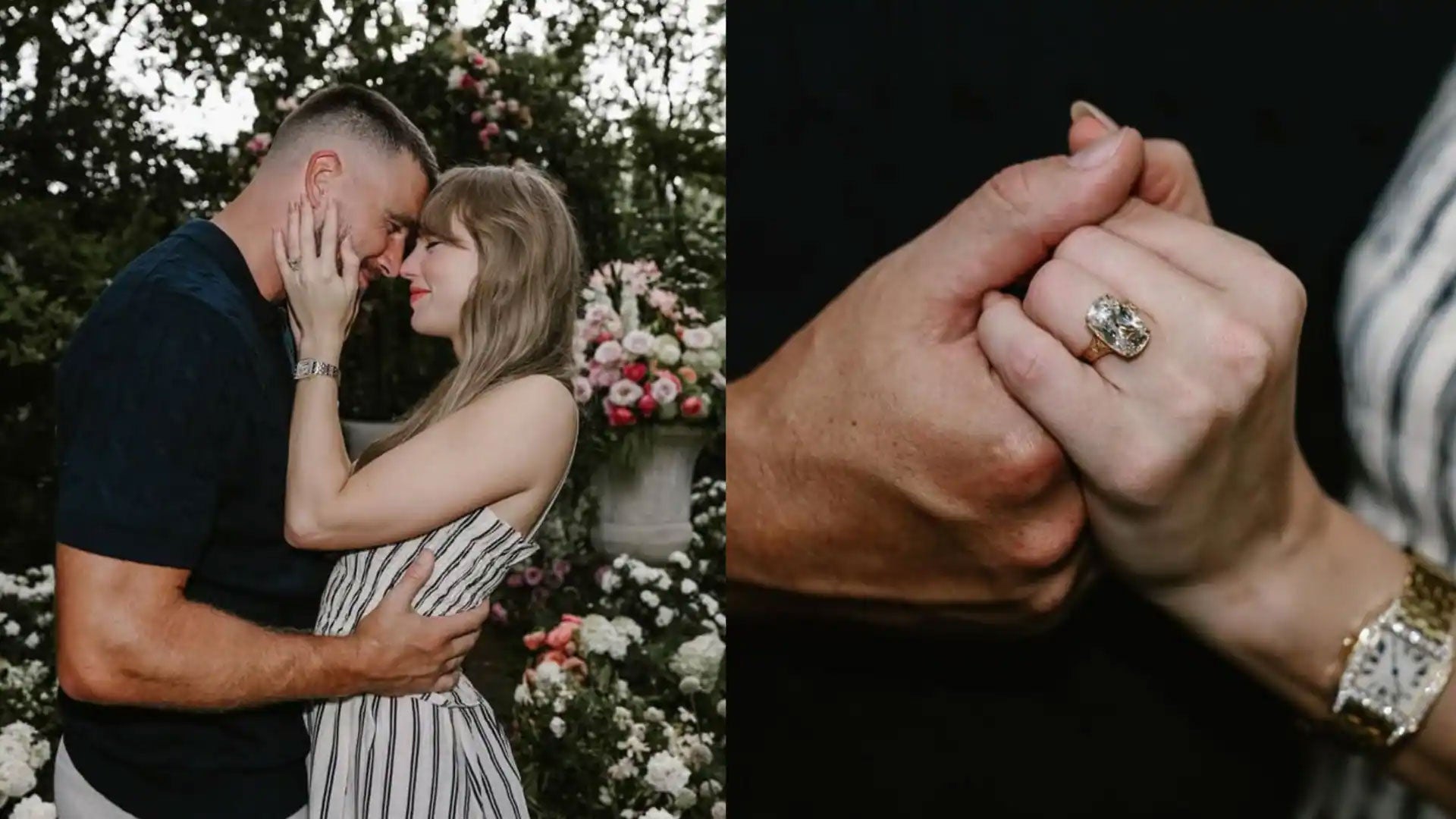
For decades, there was little ambiguity in what an engagement ring represented, or how it should appear. And yet, in recent years, that clarity has begun to dissolve. When attention turned toward Taylor Swift’s engagement ring, the interest extended beyond the object itself. What made it compelling was not simply its design, but the way it seemed to resist immediate categorization. It did not rely on spectacle alone, nor did it adhere rigidly to expectation.
Instead, it felt aligned with something more contemporary: a shift in how symbolism is constructed, understood, and expressed.
The structure that defined tradition
To understand why this shift matters, it is necessary to consider the structure that preceded it. For much of the modern era, engagement rings followed a relatively narrow framework. Diamonds became the dominant choice, not only because of their physical durability, but because of the cultural narratives built around them. The solitaire setting, with its singular focus on one central stone, reinforced an idea of clarity and permanence, a visual metaphor for commitment that was both simple and easily recognizable.
Over time, this framework became so embedded that it was rarely questioned. To choose differently was often interpreted as deviation rather than intention. But symbolism, like culture itself, is never static.
When meaning becomes personal
What distinguishes contemporary engagement rings is not a rejection of tradition, but a gradual shift in where meaning is located. Rather than being defined by a fixed set of visual codes, meaning is increasingly shaped by personal choice. The selection of a stone, the design of a setting, or even the decision to depart from convention altogether becomes part of a larger narrative, one that reflects the individuals involved rather than the expectations surrounding them.

In this context, the engagement ring becomes less about conformity and more about authorship. This is where Taylor Swift’s ring resonates on a cultural level. It does not need to be extravagant to be significant, nor does it rely on strict adherence to tradition to communicate meaning. Instead, it reflects a broader shift toward subtlety, intention, and individuality.
The quiet power of restraint
One of the most notable aspects of modern engagement rings is the movement toward restraint. Where previous eras often emphasized visibility and scale, contemporary choices frequently lean toward balance and integration. Rings are designed not only to be seen, but to be lived with, worn in everyday contexts rather than reserved for singular moments.

This does not diminish their significance, but reframes it. A ring that does not demand attention can still carry profound meaning, precisely because it exists within the rhythm of daily life. It becomes part of a continuous experience rather than a static symbol. In this sense, subtlety becomes a form of expression.
Visibility in a digital age
At the same time, engagement rings now exist within a landscape of constant visibility. They are photographed, shared, and circulated in ways that extend far beyond the private moment of exchange. This visibility introduces a new dimension to their meaning, as they become part of a broader cultural conversation.
Yet what is interesting is not an increase in uniformity, but the opposite. Rather than converging toward a single ideal, contemporary engagement rings reflect a wide range of choices: some traditional, others experimental, many existing somewhere in between. The ring becomes a point of interpretation, not a fixed symbol. And in that space, meaning becomes more layered.

Redefining permanence
Perhaps the most significant transformation lies in how permanence itself is understood. Traditionally, the engagement ring symbolized something fixed, a commitment that was visually stable and culturally defined. Today, while the idea of commitment remains, the way it is expressed has become more fluid.
Permanence is no longer tied to a single form or material. It is expressed through intention, through choice, and through the ability to define meaning on one’s own terms. A ring may still mark a moment, but it no longer needs to conform to a singular idea of what that moment should look like.
Engagement rings have always carried meaning, but that meaning is no longer singular. In the case of Taylor Swift, the ring becomes part of a broader cultural shift, one in which symbolism is no longer dictated by tradition alone, but shaped by individuality, context, and narrative. What matters is not only what the ring is, but what it represents to the person who wears it. And in that shift, today’s choices begin to say more than tradition ever could.







 Line
Line
 WhatsApp