A Cultural Story Told in Gold
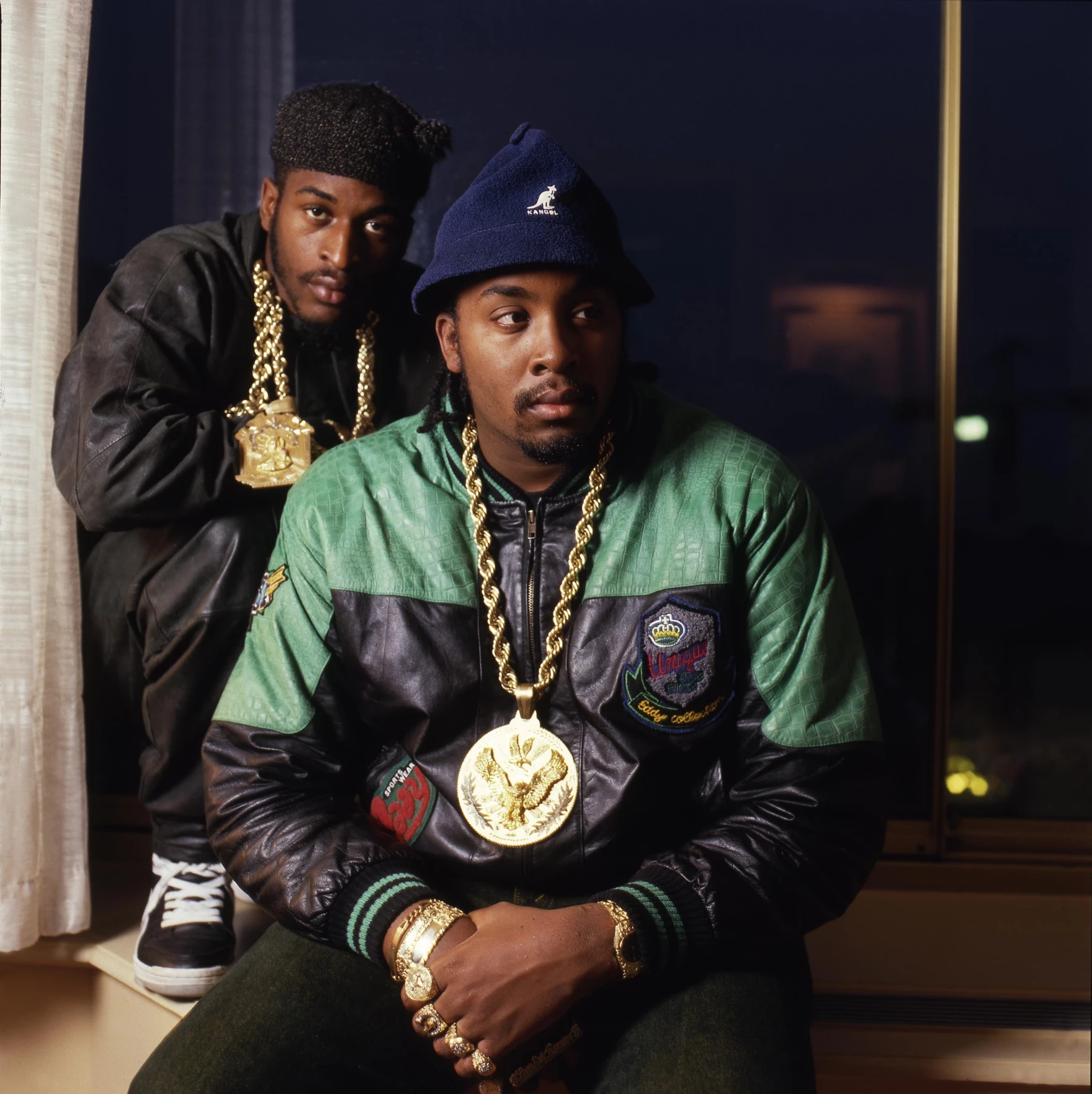
When hip-hop was born in the Bronx during the 1970s, it was not simply a new genre of music—it was a cultural revolution forged in the crucible of urban struggle, creativity, and resilience. The beats were raw, built from break loops and block parties; the rhymes spoke of lived realities often ignored by mainstream America. Alongside the music came a visual language equally bold and unapologetic. Gold jewelry quickly emerged as one of its most powerful symbols.
Rope chains, oversized medallions, and nameplates were never just decorative objects. They were worn as proclamations—announcements of presence in a society that often sought to render marginalized voices invisible. A gold chain could mean survival, triumph, and dignity. For many young Black and Latino men and women, who grew up in an era of economic decline and systemic neglect, jewelry became a visible record of resilience. Every piece carried the weight of struggle transformed into brilliance.
The symbolism of gold in hip-hop also resonated with deeper histories. Across cultures, gold has been linked with power, divinity, and immortality—from the pharaohs of Egypt to the kings of West Africa. Hip-hop artists, consciously or unconsciously, tapped into this long tradition. By wearing gold, they aligned themselves with ancestral legacies of sovereignty and self-determination. Jewelry was both armor and crown, at once protective and celebratory.
Over the decades, hip-hop jewelry grew beyond the Bronx, evolving into a global aesthetic. It inspired fashion designers in Paris, jewelers in Tokyo, and streetwear brands worldwide. It entered museum collections, where curators recognized it not just as ornamentation, but as cultural archive—a chronicle of struggle, aspiration, and artistic brilliance. Exhibitions such as Ice Cold at the American Museum of Natural History and the Smithsonian’s collections affirm its historical weight.
And yet, for all its global visibility, hip-hop jewelry remains profoundly personal. A pendant inscribed with a name, a chain gifted by a crew, a medallion representing a neighborhood—all of these are intimate markers of belonging. In cities like Detroit, jewelers such as Gold Haven continue to craft these living symbols. Their pieces honor hip-hop’s legacy while affirming its present vitality, reminding us that jewelry in this culture is never static. It is a story in motion, passed from generation to generation, carrying with it the enduring themes of identity, pride, resilience, and success.
Ancient Roots of Gold and Adornment
 Image : Atlas of Maritime Charts (The Catalan Atlas) [detail of Mansa Musa], Abraham Cresque (1325–1387), 1375, Mallorca. Parchment mounted on six wood panels, illuminated. Bibliothèque nationale de France. On view in exhibition as reproduction - Caravans of Gold, Fragments in Time: Art, Culture, and Exchange across Medieval Saharan Africa: Block Museum - Northwestern University
Gold has long been regarded as more than a precious metal; across civilizations it was revered as a material imbued with sacred energy, social prestige, and enduring symbolism. Its incorruptible shine made it an emblem of eternity, while its rarity transformed it into a measure of divine or royal authority.
Ancient Egypt: The Eternal Metal of the Gods
In Ancient Egypt, gold was known as the “flesh of the gods.” Pharaohs were buried with elaborate golden masks, jewelry, and regalia not only as treasures, but as spiritual conduits ensuring safe passage into the afterlife. Gold’s untarnished brilliance was equated with immortality, linking rulers to the sun god Ra. Wearing gold was not just ornamentation; it was a declaration of divine right and eternal life.
Greece and Rome: Triumph and Power
In classical Greece and Rome, gold jewelry became a marker of victory and authority. Generals returning from battle wore golden wreaths and carried gold ornaments as symbols of conquest. Aristocrats adorned themselves with intricately crafted rings, bracelets, and medallions, turning gold into a language of class distinction. To wear gold in these societies was to announce both wealth and proximity to political power.
West African Kingdoms: Gold as Sovereignty
In the medieval empires of West Africa, particularly Ghana and Mali, gold was central to both economy and cosmology. The kings of Mali, most famously Mansa Musa, were said to have displayed such vast quantities of gold that their pilgrimages reshaped global markets. Gold jewelry—whether in the form of ceremonial staffs, masks, or pendants—symbolized sovereignty, lineage, and spiritual balance. It was both adornment and regalia, uniting community identity with divine order.
A Legacy in the African Diaspora
This cultural reverence for gold traveled through time and across oceans. For enslaved Africans and their descendants, gold carried memories of ancestral wealth and dignity. In African-American communities, jewelry came to signify not merely luxury, but cultural survival and self-affirmation in the face of systemic erasure.
From Antiquity to Hip-Hop
Thus, when gold entered hip-hop culture in the Bronx centuries later, it was never only a matter of style. It was an unconscious reclamation of ancestral legacies—of pharaohs and kings, of empires that flourished long before colonial narratives. Hip-hop jewelry, heavy with chains and medallions, reconnected diasporic communities with symbols of honor, resilience, and sovereignty. To wear gold in hip-hop was to say: we remember, we endure, and we reign.
A Timeline of Hip-Hop Jewelry

Image : Notorious B.I.G. wearing a Jesus piece necklace - What is a Jesus Piece - History & It's Place in the Hip Hop World
The 1980s: The Rise of the Rope Chain
The 1980s marked the first golden age of hip-hop jewelry. The thick rope chain, worn by pioneers like Run-D.M.C. and LL Cool J, became the definitive statement of the era. These pieces carried more than physical weight; they embodied meaning. A heavy chain was both armor and trophy, a visible symbol of having “made it” in a society that often denied recognition to marginalized communities.
The rope chain’s bold simplicity resonated with hip-hop’s aesthetic at the time: direct, uncompromising, and street-centered. The chain was not merely ornamentation but a protective shield against invisibility. In block parties, on music videos aired through MTV, and on stage performances, the chain gleamed as proof of success born from resilience. For the first time, jewelry in hip-hop became as integral to identity as the music itself.
The 1990s: Icons, Spirituality, Faith, and Identity
As hip-hop entered the mainstream in the 1990s, jewelry grew in complexity and symbolism. The era was defined by the “Jesus piece”, popularized by The Notorious B.I.G., which fused spiritual devotion with visible success. By wearing Christ’s likeness enshrined in gold and diamonds, artists proclaimed both faith and fortune.
At the same time, record labels and rap crews commissioned custom medallions engraved with logos, transforming jewelry into wearable branding. A pendant was no longer just a decorative object; it was a flag, a banner, a symbol of belonging. Crews like Wu-Tang Clan and Death Row Records turned their icons into medallions, allowing jewelry to speak for neighborhoods, philosophies, and entire movements.
This period also saw a rise in personalization: pendants bearing initials, zip codes, or portraits of loved ones. Jewelry became a canvas of intimate symbolism, carrying meanings of faith, family, identity, and loyalty—all crystallized in gold.
2000s–Today: Customization and Maximalism

Image : Gold Haven - Facebook
The turn of the millennium ushered in an era of maximalism, fueled by rising budgets, global recognition, and hip-hop’s domination of pop culture. Jewelry evolved into extraordinary works of engineering and art.
Oversized pendants, often larger than the palm of a hand, were encrusted with diamonds in elaborate bust-down settings. Watches were “iced out” until their original design was nearly unrecognizable, transformed into dazzling canvases of brilliance. Grills, customized for teeth with intricate patterns of gold, platinum, and diamonds, became hallmarks of individuality, made famous by artists like Nelly and Lil Wayne.
Technology also played a major role: computer-aided design (CAD) allowed jewelers to push boundaries, crafting hyper-detailed, custom works that merged art with engineering. The level of personalization skyrocketed—every piece told a unique story, engraved with names, slogans, or even lifelike portraits.
Despite the maximalist aesthetics, the essence remained unchanged: hip-hop jewelry was never decoration alone. It was a biography written in metal and stone, a chronicle of identity, struggle, faith, and triumph. Today, artists across the world—from Atlanta to Lagos, Tokyo to London—continue this tradition, proving that hip-hop jewelry has evolved into a truly global language of self-expression and cultural pride.
Social and Political Dimensions

Image : The rapper wears a necklace and a grill with a large pendant. Reflecting the level of status and the transition from deprivation to wealth. - The Five Most Famous Hip Hop Jewelers
After the Civil Rights era of the 1960s, the promises of equality remained largely unfulfilled for many African-American and Latino communities in America’s urban centers. Poverty, systemic racism, redlining, and the collapse of industrial jobs left neighborhoods in the Bronx, Detroit, and beyond in cycles of neglect. In this environment, hip-hop arose not merely as entertainment, but as a cultural protest and survival strategy—a way to seize visibility when society rendered these communities invisible.
Gold jewelry became one of hip-hop’s boldest weapons in this struggle. To wear a thick chain or a diamond-studded pendant was not just to display wealth, but to declare defiance: a refusal to be erased, a proclamation of presence. It said: “We are here. We matter. We shine in spite of your attempts to dim us.” The chain became armor, not only against poverty but against the indignities of invisibility.
At the same time, jewelry functioned as portable capital. In neighborhoods where access to banking and generational wealth was scarce, gold chains and rings became tangible assets—items that could be pawned, sold, or passed down as inheritances. Jewelry was both adornment and security, merging beauty with financial survival.
Hip-hop jewelry also carried political undertones. When rappers took the stage or appeared on national television draped in gold, it was an act of resistance against stereotypes of dispossession. It challenged mainstream narratives that associated Blackness with poverty or powerlessness. By embracing luxury on their own terms, artists redefined what success looked like outside of white, corporate standards.
The symbolism extended globally as hip-hop spread. For marginalized communities in Latin America, Africa, and Asia, jewelry similarly became a statement of both pride and rebellion. The sight of a rapper in chains was no longer about simple excess; it was about rewriting narratives of exclusion into stories of triumph.
In this sense, hip-hop jewelry was never politically neutral. It has always been a dialogue between communities and the structures that tried to contain them—a shining, heavy reminder that visibility itself is power.
The Craft Behind the Shine

Image : Left, Virgil Abloh. Kenneth Cappello, Chicago, 2021. Right, Slick Rick. Libra justice scale piece, diamond star and dome rings from various years purchased mostly from jewelers on Canal Street, NYC. Clay Patrick McBride, New York, 1999 (Image credit: TBC) - Hip-hop jewellery and identity: a visual history | Wallpaper
Hip-hop jewelry, often misinterpreted as excessive display, is in truth defined by its mastery of craft. Behind every gleaming chain, pendant, or ring lies hours of meticulous labor, centuries-old techniques refined through innovation, and the unyielding pursuit of excellence. What distinguishes authentic hip-hop jewelry from cheap imitation is not simply the weight of the gold or the sparkle of the diamonds, but the discipline of artisanship.
Metalwork: The Architecture of Strength

Image : Solid Gold | Hip Hop Jewelry | King Ice
The Cuban link, iconic within hip-hop culture, is not simply a chain but an engineered structure. Each link must be cut, polished, and interlocked with mathematical precision to achieve both flexibility and strength. A true Cuban link flows seamlessly, draping naturally across the body while retaining the heft that conveys authority. The clasp, often overlooked by casual observers, is itself a feat of design—robust enough to bear weight, yet subtle enough not to break the chain’s visual rhythm.
Casting: Sculpting in Gold

Image : https://www.pinterest.com/
Lost-wax casting, a technique with roots in antiquity, allows jewelers to create custom pendants and lifelike portraits that are central to hip-hop’s storytelling tradition. The process requires carving a model, encasing it in a mold, melting the wax, and pouring molten gold into its place. The result is a faithful reproduction of intricate detail—from facial features on a portrait pendant to complex insignias of a crew or record label. Casting in hip-hop jewelry thus bridges fine art and metallurgy, making each piece a miniature sculpture.
Stone Setting: Precision and Brilliance

Image : Men's Hip Hop Jewelry Iced Out Diamond Thick Miami Cuban Link Chain Necklace
The diamond setting defines much of hip-hop jewelry’s aesthetic power. Techniques such as micro-pavé—where tiny diamonds are meticulously set side by side—and invisible settings—where stones fit seamlessly without visible prongs—demand a level of precision comparable to haute joaillerie. Inaccurate alignment or weak setting can destroy the effect, while perfect execution creates a surface that glitters like liquid light. Rows of stones must sit as evenly as lines of poetry, forming patterns that radiate unity and brilliance.
Durability: Built for Life and Stage

Image : Custom Hip Hop Jewelry Design – Iceberg Diamonds at Boulevard Mall
Hip-hop jewelry is designed not only to be admired in showcases but to be lived in—on tour buses, on stage under hot lights, in the daily rhythm of the street. Screwback studs prevent earrings from slipping loose during performances; reinforced chains withstand the pull of heavy pendants; balanced construction ensures that oversized pieces rest comfortably on the body. Each design decision speaks to functionality as much as beauty, ensuring the jewelry can endure the wear and tear of both performance and everyday existence.
Craft as Cultural Continuity

What makes hip-hop jewelry remarkable is how it fuses ancient craftsmanship with modern expression. The same techniques once used to craft regalia for kings and ritual objects for temples are now applied to create pieces that declare identity, resistance, and success within contemporary culture. In this sense, hip-hop jewelry is not only about fashion—it is about preserving a lineage of artisanship while adapting it to new contexts and communities.
Women and Hip-Hop Jewelry

Image : Salt-N-Pepa - Iconic Hip-Hop Trio HD Wallpaper - Vibrant Salt-N-Pepa Desktop Background
Although men are often spotlighted in discussions of hip-hop jewelry, women have been equally vital in shaping its meaning and visual language. Female MCs and performers in the 1980s and 1990s—such as Salt-N-Pepa, Queen Latifah, and Roxanne Shanté—used jewelry not simply as decoration, but as a form of cultural assertion. Their adornment projected strength, independence, and authority in a male-dominated industry, challenging the norms of both hip-hop and society at large.
For many women of color, especially African-American and Latina artists, jewelry became an act of self-possession and empowerment. Hoop earrings, in particular, carried powerful connotations: large, gleaming circles of gold or silver that framed the face like halos. These earrings were more than style; they were cultural badges, symbols of resistance against Eurocentric beauty standards that often marginalized Black and Latina femininity. To wear hoops was to declare pride in one’s heritage and identity.
Gold necklaces, too, were infused with meaning. They were gifts of self-love or statements of solidarity with other women in the community. Layered chains, chokers, and nameplates spelled out individuality, while simultaneously linking wearers to a broader tradition of resilience. For artists like Queen Latifah, jewelry reinforced her lyrical messages of unity, respect, and female strength.
By the 2000s and beyond, women continued to innovate within hip-hop jewelry. Artists such as Lil’ Kim, Missy Elliott, and Nicki Minaj embraced maximalism, often wearing extravagant, diamond-encrusted pieces that rivaled those of their male counterparts. Their jewelry was bold, playful, and unapologetically luxurious—an assertion that women in hip-hop could command just as much space, wealth, and recognition.
Today, the influence of women extends beyond performance into design and entrepreneurship. Female jewelers and fashion icons reinterpret hip-hop aesthetics for new generations, ensuring that jewelry remains not only a marker of style, but also of feminist expression, cultural survival, and defiance.
In this way, hip-hop jewelry for women has always been about more than ornamentation—it has been a language of confidence, autonomy, and strength, shimmering with both personal and political meaning.
Jewelry as a Language

Image : Jay-Z, 18 years old in this photo and still an unknown in hip-hop, was serious about his jewelry from the start. While attending a photo shoot with friend and rapper Jaz-O, Hov wore a double gold rope with an anchor pendant, tiger nugget watch, king cobra pendant, tiger four-finger rings, and Gucci link bracelet. The Gucci link was popularized by the Gucci brand, but it is formally known as a marine link, consisting of large oval links flattened or hammered together. Timothy White, Brooklyn, New York, 1988 - The History of Hip-Hop, as Told Through the Jewelry That Defined It | Vanity Fair
Hip-hop jewelry functions as a form of wearable text—a visual language through which individuals and communities articulate stories, values, and allegiances. Unlike conventional adornment, these pieces are not passive decorations; they speak, they declare, they broadcast meaning in ways that words sometimes cannot.
Identity: The Self Inscribed in Metal
Nameplates, initial pendants, and personalized medallions became vital tools of self-authorship in hip-hop culture. In communities historically denied visibility, to engrave one’s name in gold was an act of permanence—a refusal to be forgotten. It was biography rendered in precious metal, ensuring that personal identity could not be erased by poverty, prejudice, or neglect. A nameplate chain was not just jewelry; it was a manifesto of selfhood.
Collective Power: Jewelry as Emblem of Unity
Beyond the individual, jewelry also spoke for the collective. Crews, record labels, and neighborhoods designed matching pendants as symbols of belonging and loyalty. These pieces functioned like heraldic shields in medieval Europe—icons that transformed groups into visible, unified forces. For Wu-Tang Clan, Death Row Records, and countless local crews, medallions became portable banners, worn close to the body yet projecting outward to the world: this is who we are, and we stand together.
Place: Anchoring Roots in Gold
Location and origin have always been central to hip-hop identity, and jewelry became one of the clearest ways to mark this. Pendants shaped like state outlines, zip codes engraved in bold lettering, or symbols of local sports teams served as anchors, tying artists to their neighborhoods even as fame carried them across the globe. A Detroit rapper’s “313” pendant or a Brooklyn MC’s borough medallion was more than hometown pride—it was a declaration that no matter how high they rose, they remained rooted in the community that shaped them.
Beyond Words: Jewelry as Multilayered Narrative
Together, these elements make hip-hop jewelry a language that is at once personal and collective, local and global. Each chain, pendant, or ring tells a layered story: of selfhood, of loyalty, of place, of struggle and triumph. In galleries and on stages, on city streets and in music videos, these gleaming texts communicate across generations and geographies.
Hip-hop jewelry reminds us that language does not only exist in words. Sometimes it exists in the gleam of gold, the weight of a chain, the sparkle of diamonds—stories carried on the body, visible to all, unignorable and indelible.
Economic and Commercial Dimensions

Image : The legendary OG rapper Slick Rick, the man who is known for his nasal raps and classics ‘The Show’, ‘La Di Da Di’ (both with Doug E Fresh) and ‘Children’s Story’ is coming to Dublin as part of a European tour. Photograph: by Janette Beckman, Courtesy of Fahey / Klein Gallery - A hip-hop jewelry exhibition is opening at the American Museum of Natural History in NYC
Hip-hop jewelry has always existed at the intersection of culture and commerce. Beyond its symbolism, it has functioned as an economic system, shaping and being shaped by markets both local and global. What began as neighborhood transactions in New York and Detroit has evolved into a billion-dollar industry that now commands international attention.
Early Partnerships: Jewelers and Communities
In the early days of hip-hop, access to fine jewelry was limited. Many artists and fans turned to Jewish and Arab jewelers in New York’s Diamond District and in Detroit’s local gold shops. These jewelers became trusted partners, working closely with rappers to design custom pieces that reflected identity, faith, and community. Their shops were more than retail spaces—they were cultural hubs where artistry and aspiration converged.
Jewelry as Liquid Asset
For many in marginalized neighborhoods, jewelry also functioned as portable wealth. Unlike cash, which could vanish or devalue, a gold chain held intrinsic value. It could be pawned, sold, or traded in times of financial strain, effectively serving as an alternative banking system in communities with limited access to traditional credit. This dual role—both adornment and financial safeguard—gave hip-hop jewelry a practical as well as symbolic importance.
The Rise of Secondary Markets
Pawn shops and resale markets became extensions of this economic ecosystem. A chain bought to celebrate success could later circulate within the community, retaining its cultural aura while also serving as capital. This cycle blurred the line between jewelry as fashion and jewelry as currency, reinforcing its place as an adaptable asset in unstable economies.
From Streets to Auction Houses
By the 2000s, as hip-hop rose to global prominence, its jewelry entered a new phase: collecting and auctions. Custom pieces once commissioned for specific artists began appearing in international markets, appraised not only for their material worth but also for their cultural significance. Today, auction houses and private collectors place hip-hop jewelry alongside fine art, recognizing its value as both aesthetic achievement and historical artifact.
A Global Industry
Hip-hop jewelry is now part of a worldwide industry, with jewelers in Tokyo, Lagos, London, and Dubai crafting pieces inspired by its style. Social media and celebrity culture have further amplified demand, turning local traditions into global fashion trends. What began in neighborhood shops has become a transnational economy, proving that hip-hop jewelry is as much a business as it is an art form.
Belief and Spiritual Power

Image : Jesus piece - Jesus piece (jewelry) - Wikipedia
Gold and diamonds in hip-hop culture are not solely indicators of wealth; they are imbued with spiritual resonance that draws upon centuries of global belief systems. Jewelry, when worn, becomes both protection and proclamation, merging the sacred with the visible.
Christian Symbolism: Jesus Pieces and Crosses
The iconic Jesus piece, popularized in the 1990s by The Notorious B.I.G., exemplifies the fusion of faith and visibility. By encasing the likeness of Christ in gold and diamonds, artists proclaimed devotion while simultaneously elevating faith into a symbol of success. Cross pendants, often worn prominently, were not hidden tokens of religion but public affirmations of guidance, survival, and divine favor. Within hip-hop, these objects became talismans—reminders that faith sustained individuals through struggle while also legitimizing their triumphs.
African Legacies: Gold as Life Force
In many African traditions, gold is viewed as more than a material resource. It is seen as a vital life force, linked to the sun and to the divine energy that sustains the world. West African kingdoms, such as Ghana and Mali, treated gold not only as currency but as a sacred substance that bound earthly rulers to cosmic order. This cosmology traveled with the African diaspora, shaping how gold would later be understood by descendants in the Americas. When hip-hop artists wear heavy chains and medallions, they are—consciously or unconsciously—continuing this lineage, summoning ancestral strength and affirming cultural survival.
Jewelry as Transformation
In hip-hop, jewelry also embodies the power of transformation. It represents a journey: from scarcity to abundance, from invisibility to recognition, from oppression to triumph. To put on a chain is to put on history—it is the act of turning hardship into brilliance, silence into voice. Each diamond and link of gold tells a story of metamorphosis, a declaration that the wearer has risen above limitations imposed by society.
Protection and Empowerment
Beyond its symbolic meanings, jewelry in hip-hop carries connotations of spiritual armor. Heavy chains are likened to shields; pendants are carried close to the heart like sacred charms. For many, the act of adorning oneself is akin to preparing for battle, whether that battle is on the stage, in society, or within one’s personal life. The shine of gold is thus not only for others to see—it is also a source of inner strength for the wearer.
Detroit’s Chapter in the Story

Image : Motor City Iconic - A Guide to Detroit Hip-Hop - ink magazine
Detroit’s chapter in hip-hop jewelry is inseparable from the city’s broader cultural identity—a place where resilience, creativity, and industrial grit converge. Known historically as the Motor City, Detroit was once the engine of America’s auto industry. When factories closed and economic decline swept through the city in the late 20th century, Detroit’s communities responded not with silence, but with creativity. Hip-hop became one of the city’s strongest voices, carrying sharp lyricism and raw authenticity rooted in everyday survival.
This distinctive character also extended to jewelry. Detroit’s hip-hop adornment is bold yet practical, reflecting the dual realities of the city: one of hard labor and one of artistic brilliance. Gold and diamonds were favored, but often designed for both stage and street use—pieces durable enough for daily wear, yet dazzling enough to command attention in music videos or live performances. Unlike the maximalist flamboyance of New York or Los Angeles, Detroit’s jewelry often blended strength with subtlety, making it both statement and shield.
Jewelry also mirrored the city’s traditions of self-reliance and entrepreneurship. Local jewelers collaborated closely with artists, crafting custom pieces that spoke directly to Detroit’s neighborhoods and identities. Pendants shaped like the city skyline, the “313” area code, or references to Detroit’s iconic sports teams became visible signs of pride and belonging. To wear Detroit jewelry was not just to follow hip-hop fashion trends—it was to carry the city itself around the neck, on the wrist, or across the chest.
The significance of Detroit’s contribution has not gone unnoticed. Exhibitions such as D-Cyphered at the Detroit Institute of Arts and Motor City Music at the Detroit Historical Society have documented this unique intersection of music, art, and adornment. These exhibitions highlight jewelry not merely as accessories but as cultural artifacts, physical records of how Detroit’s artists shaped, and continue to shape, the global hip-hop story.
Today, Detroit remains a vibrant hub where tradition and innovation intersect. Local jewelers and international designers alike look to the city’s hip-hop scene for inspiration, ensuring that Detroit’s chapter in the history of hip-hop jewelry continues to gleam—rooted in struggle, defined by artistry, and illuminated by gold.
Gold Haven: The Living Tradition

Image : Zach Reid - Facebook
Founded by jeweler Zach Reid in Southfield, Michigan, Gold Haven represents more than a jewelry store—it is a continuation of a cultural tradition that stretches from the Bronx of the 1970s to the global hip-hop stages of today. For Reid, jewelry is not only about luxury or aesthetic beauty; it is about craft, meaning, and heritage.
Gold Haven’s work reflects the dual essence of hip-hop jewelry: bold statements of identity and finely honed craftsmanship. Their custom pendants range from nameplates and portraits to intricate symbols of faith and community. Statement rings and bracelets are engineered not just for show, but for durability, designed to withstand the rigors of daily life as well as the intensity of stage performances. Even the smallest details, such as screwback studs, speak to a commitment to both practicality and elegance.
What distinguishes Gold Haven is its ability to balance symbolism with endurance. Each piece tells a story—of personal triumph, of neighborhood pride, of spiritual devotion—yet it is also built to last, to be worn not only as fashion but as heirloom. In this way, Gold Haven reflects a key truth of hip-hop jewelry: that it is simultaneously personal biography, communal identity, and cultural archive.
Gold Haven’s presence in Detroit’s hip-hop scene further underscores the city’s unique role in the global narrative. By working closely with local artists, athletes, and community figures, the jeweler ensures that each commission resonates with authenticity. These pieces are not mass-produced; they are collaborations, artifacts of living culture, forged from gold and diamonds but also from memory and meaning.
In bridging the gap between tradition and innovation, Gold Haven embodies the living spirit of hip-hop jewelry. It honors the legacy of rope chains, medallions, and Jesus pieces, while pushing the craft forward with modern technology and design. Each creation serves as a reminder that hip-hop jewelry is not frozen in the past—it evolves, adapts, and continues to shine as both a cultural statement and a lasting treasure.
Reading a Hip-Hop Jewelry Piece

Image : The Golden Age of Hip Hop - Hip Hop History: From the Streets to the Mainstream
To read a hip-hop jewelry piece is to engage with it as both work of art and cultural document. Curators, collectors, and even fellow artists approach these creations with a critical eye, seeking not only beauty but also meaning. Each element—form, structure, and detail—functions as a layer of text, telling stories of identity, struggle, pride, and transformation.
Profile & Proportions: The First Impression
A jewelry piece must speak at a distance. From across a stage or a crowded room, the outline should remain bold and legible. Oversized pendants, Cuban link chains, or hoop earrings rely on clarity of design to assert presence. For curators, the silhouette becomes a defining marker: does the piece command attention as a cultural symbol, not just as ornament?
Construction: Integrity of Craft
A true hip-hop jewelry piece is not hollow imitation but solid, carefully engineered craftsmanship. The back should be finished, clasps should be robust, and links should articulate fluidly. Collectors examine these features not only to assess durability but to judge whether the piece belongs in the lineage of fine jewelry traditions. Construction embodies respect for both the material and the wearer.
Stone Setting: Precision in Brilliance
Diamonds are central to hip-hop jewelry’s visual impact, but their arrangement is what defines excellence. Stones must be aligned, consistent, and securely set. Micro-pavé work demands rows of gems so even they resemble woven fabric. Invisible settings challenge jewelers to achieve seamless brilliance. For curators, the quality of stone setting can determine whether a piece is ephemeral fashion or enduring artifact.
Weight & Balance: Wearability and Authority
A hip-hop chain or pendant must feel substantial—its weight conveys authority. Yet it must also rest comfortably, balanced against the body. Oversized pieces risk awkwardness unless carefully engineered. The marriage of weight and wearability is part of the artistry, ensuring that the jewelry is not merely an object to admire but an adornment to live in, dance in, and perform with.
Symbolism: The Story Within
Perhaps most importantly, hip-hop jewelry carries narratives encoded in gold and diamonds. A pendant shaped like a zip code, a medallion bearing a crew’s insignia, a Jesus piece glowing with devotion—each tells a story of faith, identity, community, or triumph. For institutions, it is this symbolic depth that elevates a piece from accessory to cultural artifact. Jewelry becomes biography, memory, and proclamation all at once.
Beyond Evaluation: Jewelry as Archive
When curators assess jewelry for museum collections, they are not only judging craft but also reading cultural history. For collectors, choosing a piece is not only about investment but about preserving a fragment of hip-hop’s evolving narrative. In both cases, the criteria of profile, construction, setting, weight, and symbolism become tools for interpreting jewelry as part of a larger living archive.
Exhibition and Heritage

Image : Ice Cold - An Exhibition of Hip-Hop Jewelry opens at the American Museum of Natural History on May 9, In the MelIssa and KeIth Melster Gallery, part of the AllIson and Roberto MIgnone Halls of Gems and Minerals. Alvalro KedIng/© AMNH - Ice Cold: An Exhibition of Hip-Hop Jewelry | AMNH)
Display and Legacy
Today, museums across the world recognize that hip-hop jewelry is not merely a fashion accessory but a vital historical record and a cultural inheritance worthy of preservation. Within galleries, these objects are often displayed alongside crowns, regalia, and ritual artifacts of ancient civilizations, underscoring the idea that all of them function as symbols of power, identity, and social status.
1. Institutional Recognition
What was once regarded as luxury within the entertainment industry has now entered the permanent collections of leading institutions, such as the Smithsonian National Museum of African American History and Culture and the American Museum of Natural History, which have curated exhibitions dedicated to hip-hop jewelry. These initiatives affirm that the pieces belong within the domain of material culture, possessing artistic as well as historical value.
2. Cultural Testimonies
When exhibited, each piece becomes a cultural witness, narrating the story not only of the individual who wore it but also of the community from which it emerged. Monumental Cuban link chains of the 1980s–1990s or diamond pendants inscribed with the names of late rappers embody ambition, identity, and resistance to structures of exclusion.
3. Amplified Voices
If crowns and regalia once spoke as the voice of sanctioned authority, hip-hop jewelry represents the voices of those historically marginalized. Its presence in the museum space enshrines those voices, granting them recognition equal to the histories of kings and rulers.
4. Heritage for the Future
The conservation and exhibition of hip-hop jewelry extend beyond safeguarding the material itself; they serve to preserve collective memory for future generations. Through these objects, younger audiences may learn, understand, and take pride in the roots of their own modes of expression. In this sense, hip-hop jewelry is not simply adornment but a heritage of resilience, creativity, and continuity, testifying to both struggle and triumph.
Care and Conservation
The Care and Preservation of Jewelry
Proper care is essential to ensure that jewelry retains not only its aesthetic value but also its ability to be passed down as a cultural and familial heirloom. Jewelry that carries the stories of its owners—whether artists, performers, or family members—becomes a cultural testimony, embodying memory, achievement, and community identity.
1. Cleaning
Gentle cleaning is of utmost importance. Use mild soap diluted in warm water and a soft-bristled brush to remove dust and debris without damaging the metal surface or the setting of gemstones. This method is especially suitable for intricate works such as cast-gold pendants or finely polished Cuban link chains.
2. Avoidance of Damage
For pieces heavily encrusted with diamonds or gemstones, particularly those using pavé or invisible settings, strong chemicals such as chlorine or ammonia, as well as ultrasonic cleaning devices, should be avoided. These may loosen adhesives or weaken stone settings, risking loss or damage to important pieces.
3. Inspection
Clasps, locks, and screws—though small—play a crucial role in the security of jewelry. Regular inspection ensures that necklaces or earrings can be worn safely without risk of loss, especially during stage performances or other physically demanding activities.
4. Storage
When not in use, jewelry should be stored individually in soft fabric pouches or lined cases to prevent scratching. Precious metals and large diamonds can mar the surfaces of other pieces if stored improperly, diminishing their beauty and integrity.
5. Conservation Perspective
Within the museum context, hip-hop jewelry is not merely an object of luxury but a cultural artifact that reflects identity and history. Conservation in this sense goes beyond safeguarding the material; it is also about protecting the voices and stories embedded in every diamond and every link of a chain, ensuring that future generations may experience their meaning and power in full.
Further Reading
-
Ice Cold: An Exhibition of Hip-Hop Jewelry — American Museum of Natural History
-
Hip-Hop (R)Evolutions — Smithsonian National Museum of African American History & Culture
About Jeweler Collective
Jeweler Collective documents global jewelry cultures — linking history, craftsmanship, and contemporary makers. This article is part of our commitment to preserving hip-hop’s jewelry heritage while showing how it continues in Detroit today.




 Line
Line
 WhatsApp