How a classic material is being completely redefined
Pearls have always been present, but rarely questioned. Seen as timeless, refined, and quietly traditional, they’ve long belonged to a very specific visual language. Today, that language is shifting. What was once predictable is being redefined, not through reinvention, but through reinterpretation.
A material that never really disappeared
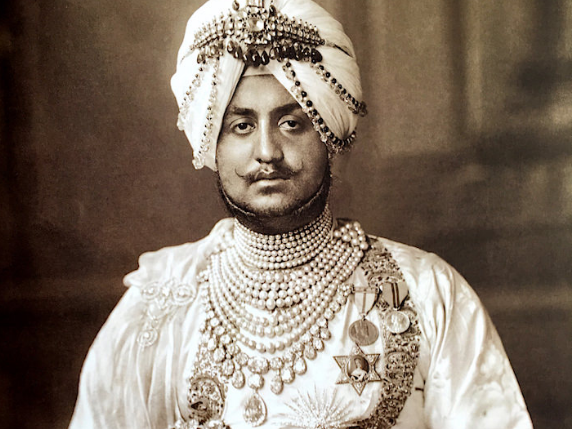
For centuries, pearls have occupied a very specific place in the cultural imagination. They were associated with restraint, refinement, and a kind of quiet, inherited elegance. Worn by royalty, immortalized in cinema, and passed down through generations, pearls became shorthand for tradition itself.
They were never loud, experimental and meant to disrupt. Yet today, pearls are doing exactly that. What we are witnessing is not a “trend comeback” in the conventional sense. Pearls did not vanish and return. Instead, they have been reinterpreted, taken out of their traditional context and placed into entirely new cultural, aesthetic, and social frameworks.
The result is something unexpected: A material historically tied to conformity is now being used to express individuality.
From inheritance to intention
Traditionally, pearls were not something you chose, but something you received. That tended to be in the form of a gift marking a milestone, an heirloom passed from one generation to the next or a piece tied to ceremony, not self-expression.
Today, that dynamic has shifted. Pearls are increasingly worn by people who are actively shaping their identity, rather than inheriting it. This shift reflects a broader cultural movement: the transition from tradition as obligation to tradition as reference.
In this new context, pearls are no longer confined to formal occasions, age-specific expectations or gender norms. Instead they appear layered with gold chains, styled with casual clothing or even worn asymmetrically and imperfectly. This recontextualization transforms their meaning. The pearl is no longer a symbol of conformity but becomes a tool for reinterpretation.
Imperfection as the new standard
One of the most significant shifts in how pearls are perceived lies in the growing appreciation for imperfection. Historically, the most valued pearls were perfectly round, smooth and symmetrical. These qualities aligned with a broader aesthetic ideal: control, order, and predictability.
Now, baroque pearls (irregular, asymmetrical, often unpredictable) are gaining prominence. Their appeal lies precisely in what was once considered flawed.
This shift reflects a deeper cultural change: a move away from uniform perfection, an acceptance of variation and irregularity and a preference for authenticity over polish. In this sense, pearls are not just being redesigned, but revalued.
A global material, reinterpreted locally
Pearls have always been global, found in waters from the Persian Gulf to Southeast Asia, Japan, and beyond. But their meanings have never been universal. Each region has historically assigned its own cultural significance to the material. What is different today is the way local perspectives are shaping global aesthetics.
In Southeast Asia, where pearl cultivation remains deeply embedded in both economy and culture, designers are beginning to reinterpret pearls through a contemporary lens. Rather than mimicking Western luxury standards, they are embracing organic forms, integrating local materials as well as drawing from regional histories. This results in jewelry that feels both rooted and current.
At the same time, global audiences are becoming more receptive to these interpretations. The flow of influence is no longer one-directional. Instead of a single dominant narrative, pearls now exist within multiple, overlapping cultural frameworks.
Gender, styling, and the collapse of old categories
Perhaps one of the most visible transformations in pearl culture is their movement beyond traditional gender boundaries. Historically, pearls were coded as feminine, associated with softness, modesty, and decorum. Their presence in men’s fashion was limited and often symbolic rather than stylistic.
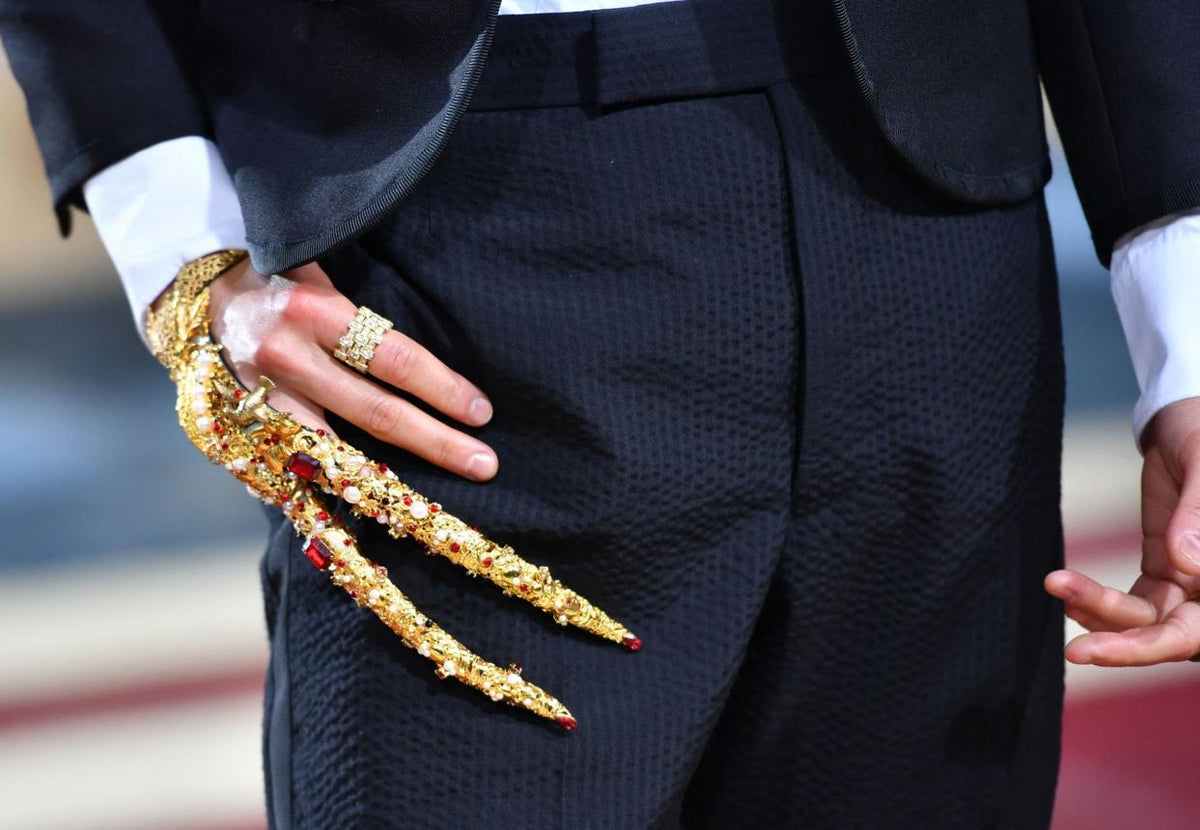
Today, that boundary is dissolving. Public figures, designers, and everyday wearers are incorporating pearls into menswear and gender-neutral styling. The result is not simply aesthetic variation, but a redefinition of what pearls can represent. They are no longer tied to a specific gender, age group or social role. Instead, they function as a flexible element within personal style: adaptable, reinterpretive, and open-ended.
The quiet evolution of a classic
What makes the return of pearls particularly compelling is its subtlety. There is no single defining moment, abrupt shift or clear beginning or end. Instead, the transformation is gradual, visible in small changes: how pearls are styled, who wears them, what shapes are valued and where they appear.
This quiet evolution mirrors the nature of the material itself. Pearls do not demand attention but accumulate meaning over time.
Redefining value
At the center of this shift is a deeper question: What makes something valuable today?
For much of modern history, value in jewelry was tied to its rarity, perfection and price. And while these factors still matter, they are no longer sufficient. Today, value is increasingly linked to story, context, identity and origin. Pearls, with their long history and natural formation, are uniquely positioned to embody these dimensions. Their redefinition is not accidental: it reflects broader changes in how people relate to objects.
Not a comeback, but a continuation
To describe pearls as “returning” is, in many ways, inaccurate. They never left, but some things have changed: how they are seen, how they are worn and how they are understood. In that reinterpretation, pearls have become something they were never quite allowed to be before: adaptable, expressive and entirely contemporary.
Pearls have always been shaped by their environment, formed slowly, layer by layer, in response to external conditions. It seems fitting, then, that their meaning would evolve in the same way. And perhaps that is what makes their transformation so compelling:
They have not changed what they are. Only what they are allowed to represent.



 Line
Line
 WhatsApp