Styling across environments and meaning
The same piece, redefined by where it exists
Jewelry has never been a fixed language, even if it has often been presented as one.
A single piece can carry entirely different meanings depending on where it is worn, how it is styled, and the environment in which it is placed. What appears ceremonial in one setting may feel excessive in another, while something understated in daily life can take on unexpected significance when introduced into a formal context.
Nothing about the object itself changes, and yet everything about how it is perceived does. This quiet transformation reveals something essential: jewelry is not defined solely by its material or design, but by the conditions in which it exists.
Ceremony as structure, symbolism, and expectation
Within ceremonial spaces, jewelry operates according to a system that is at once visual and deeply symbolic, where scale, material, and composition are guided by long-standing cultural expectations rather than personal preference alone. Pieces are layered deliberately, often in abundance, not as an act of excess but as a reflection of meaning — a visual language that communicates status, continuity, spirituality, and belonging.
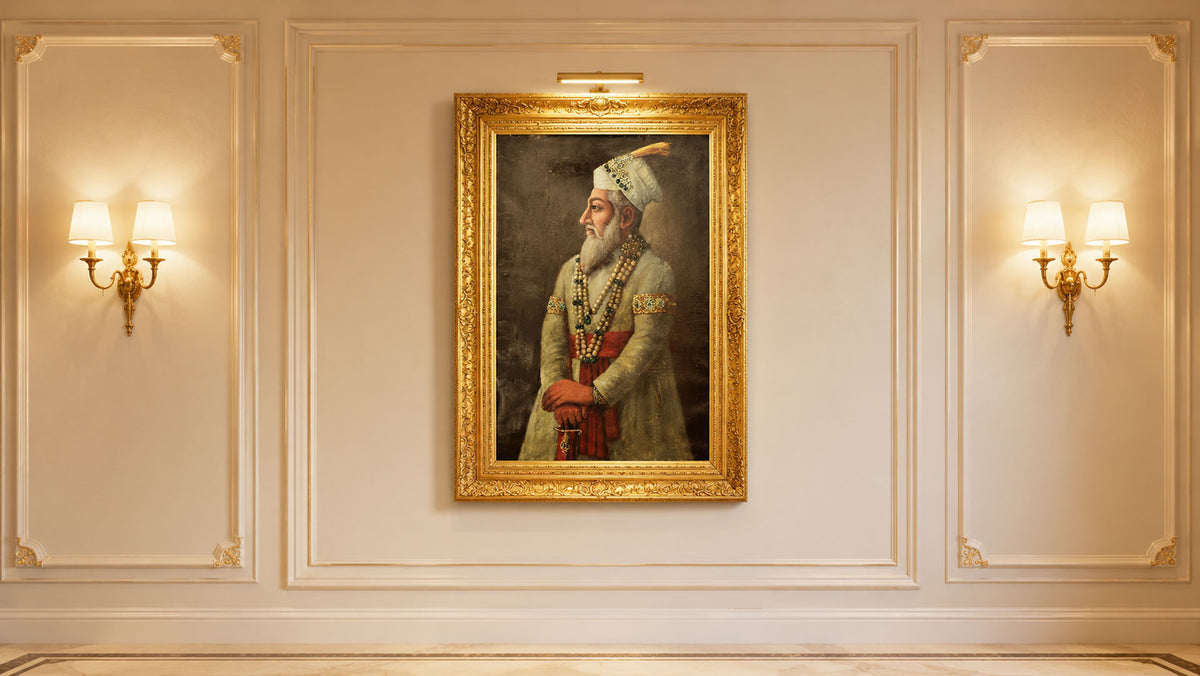
In many parts of South and Southeast Asia, for instance, gold jewelry worn during weddings or rituals is inseparable from the cultural moment itself. It signifies prosperity, protection, and lineage, carrying with it generations of inherited meaning. The weight of the jewelry is not simply physical; it is historical, social, and emotional.
To remove jewelry from a ceremony is not merely to remove an accessory. It is to remove part of the structure.
When structure gives way to interpretation
Outside of these structured environments, however, the logic begins to loosen, and jewelry transitions from something prescribed to something chosen. The completeness of ceremonial adornment gives way to selectivity, where a single piece may carry the weight of what was once expressed through many.
A necklace that once belonged to ritual may be worn casually, layered with other elements or styled in isolation. Earrings that were designed to be symmetrical and formal may be reinterpreted as subtle accents within an otherwise minimal look. The shift is not only visual, but conceptual, as jewelry moves from collective meaning toward individual expression.
In this space, the wearer becomes the author of meaning, rather than its inheritor.
Translating heritage into a global language
As jewelry moves between ceremony and everyday life, it also moves across cultural and geographic boundaries, undergoing a process of translation that is both subtle and transformative. Designs rooted in specific traditions are increasingly being recontextualized within global fashion, not through imitation, but through reinterpretation.
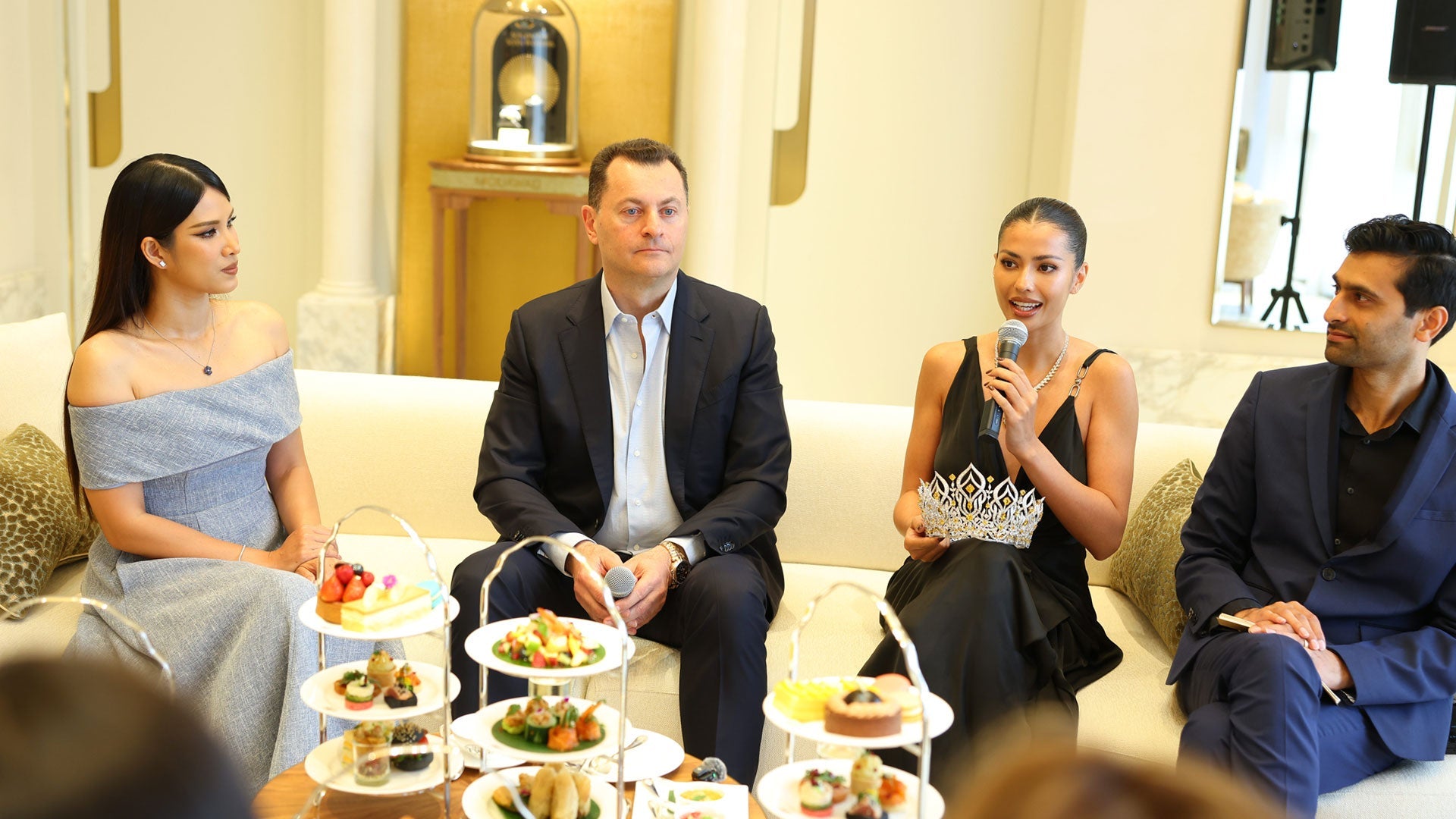
Younger designers, particularly across Southeast Asia, are navigating this intersection with increasing clarity, drawing from heritage while responding to contemporary aesthetics. Traditional forms are simplified, materials are combined in unexpected ways, and scale is adjusted to suit modern lifestyles. What emerges is not a dilution of cultural meaning, but an expansion of it: a way of allowing jewelry to exist simultaneously in multiple contexts.
This is where jewelry becomes fluid, capable of carrying both its origin and its evolution.
Deepika Padukone: between tradition and global presence
Few public figures illustrate this transition as clearly as Deepika Padukone, whose presence across both traditional and global platforms highlights the adaptability of jewelry across contexts.
In ceremonial settings, her jewelry reflects the full weight of tradition, layered gold pieces, intricate detailing, and a visual language deeply rooted in cultural expectation. The styling is complete, intentional, and aligned with a collective understanding of meaning.
Yet on international red carpets, the approach shifts. Jewelry becomes more restrained, often centered around a single piece that complements rather than defines the look. Diamonds replace gold, scale is reduced, and the overall composition aligns with a global aesthetic that prioritizes balance and subtlety.
What remains constant is not the jewelry itself, but the ability to move between these worlds without losing coherence.
Timothée Chalamet: redefining where jewelry belongs
While some adapt their jewelry to suit the environment, Timothée Chalamet has consistently challenged the idea that jewelry belongs to a specific context at all.
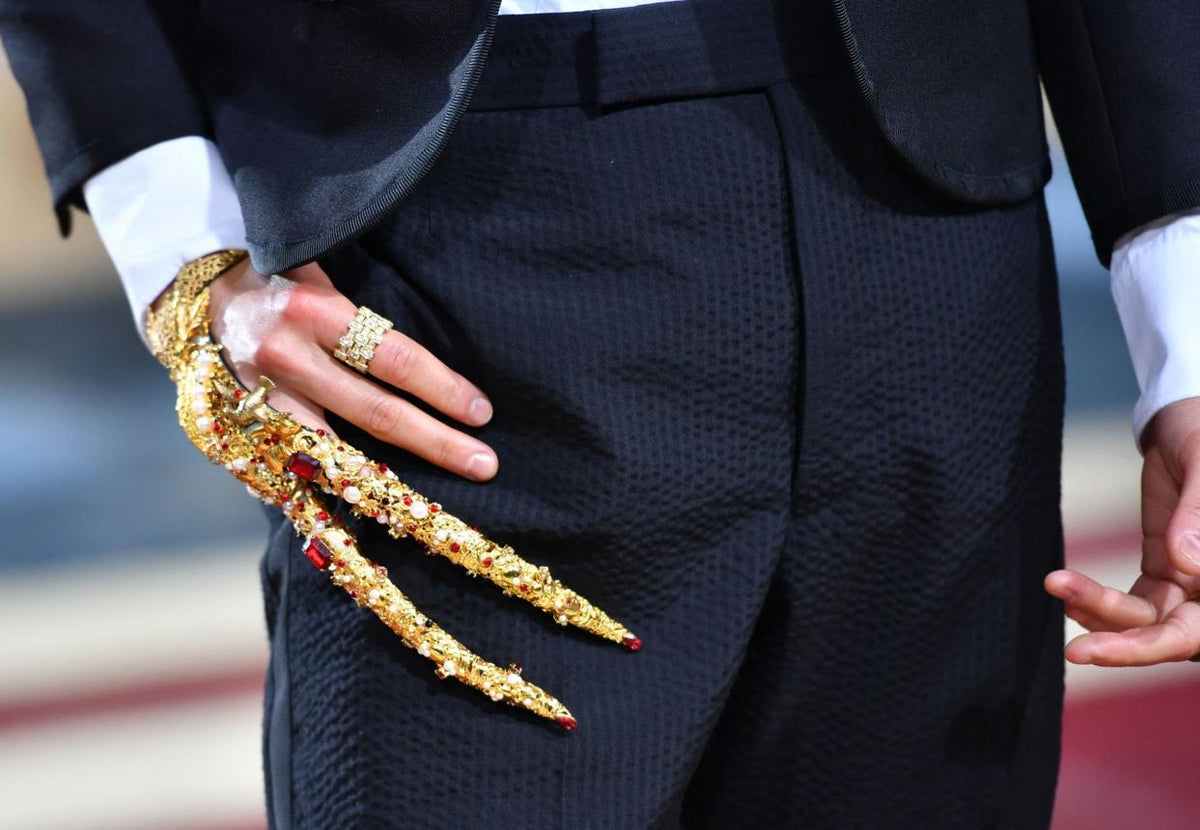
On red carpets, he often incorporates pieces from houses like Cartier: necklaces, brooches, and rings that historically would have been reserved for more formal or traditional styling. Yet what distinguishes his approach is not the jewelry itself, but where and how it appears.
These pieces are not confined to convention. They are worn with tailoring that feels relaxed, sometimes even understated, allowing the jewelry to exist without being over-explained. In other moments, similar elements appear in less formal settings, subtly integrated rather than formally presented.
The effect is a redefinition of boundaries, where jewelry is no longer tied to occasion. It becomes part of a continuous visual language, one that moves fluidly between ceremony, fashion, and everyday life.
Environment as an active influence
Beyond cultural context, the physical environment plays an equally significant role in how jewelry is experienced, introducing variables that cannot be fully controlled or replicated.
Light shifts throughout the day, altering the way surfaces reflect and materials are perceived. A pearl worn near the ocean carries a softness that differs entirely from how it appears under artificial lighting. Gold takes on warmth in natural sunlight, while gemstones reveal depth gradually as they interact with changing conditions.
Movement within space further complicates this relationship. A crowded city, a quiet interior, or an open landscape each produces a different rhythm, and jewelry responds accordingly, becoming more than a static object and instead part of a dynamic environment.
Meaning as something that evolves
Perhaps the most significant transformation is not visual, but conceptual. Jewelry no longer carries a single, fixed meaning tied exclusively to its origin. Instead, it accumulates layers as it moves between contexts, shaped by how it is worn, where it is placed, and who chooses to wear it.
A piece that begins in ceremony does not lose its significance when worn in everyday life; it gains new dimensions. What was once collective becomes personal, and what was once prescribed becomes interpreted. This evolution does not erase history, but extends it.
The journey from ceremony to street is not a departure, but a continuation, one that reflects the changing ways in which jewelry is understood, worn, and valued. As boundaries between contexts become increasingly fluid, jewelry is no longer confined to specific moments or meanings. It moves freely between tradition and modernity, between structure and spontaneity, adapting without losing its essence. And in that movement, it becomes something more complex, more personal, and ultimately more complete, shaped not only by what it is, but by where it exists.



 Line
Line
 WhatsApp