Tracing labor conditions from mine to market

The cost we don’t see
Jewelry is often presented as something refined, polished, controlled, and removed from the conditions in which it was created. Displayed in glass cases or photographed under precise lighting, it appears detached from process, reduced to surface and form. Its value is discussed in terms of material, design, and finish, while the path it takes before reaching the wearer is rarely considered.
And yet, that path is where its true cost is formed. Because behind every piece of jewelry, particularly those produced at scale and sold at low cost, there exists a chain of labor that is uneven, often invisible, and rarely reflected in the final price.
What appears accessible is not always affordable, but often subsidized by something else.
Where extraction begins
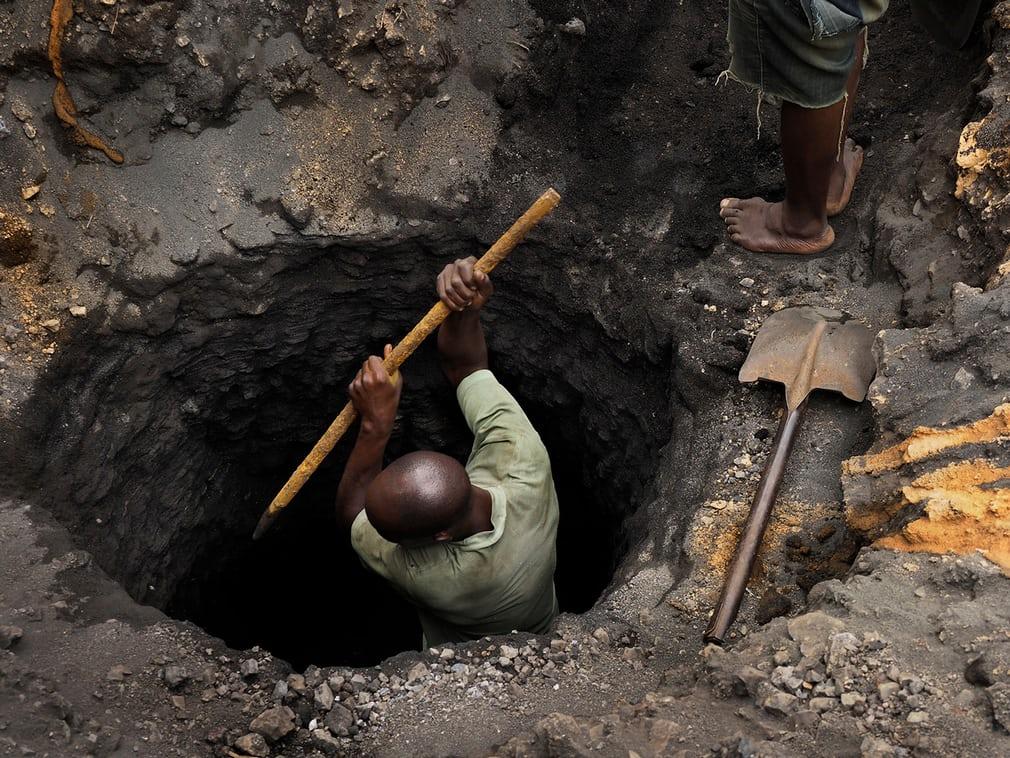
The journey of jewelry begins long before it is shaped or sold, in places where materials are extracted under conditions that vary widely depending on geography, regulation, and scale. In industrial mining operations, processes are mechanized, regulated, and monitored to varying degrees. But alongside these systems exists another reality. Small-scale and artisanal mining, where labor is often manual, oversight is limited, and economic pressure is immediate.


In these environments, gemstones and metals are not discovered through controlled systems, but through physical endurance. Workers dig, sift, and search under conditions that can be unstable, hazardous, and uncertain. Income is inconsistent, dependent on what is found, and often insufficient relative to the effort required. The material that eventually becomes something delicate begins in conditions that are anything but.
The distance between value and compensation
As materials move through the supply chain, their value increases, sometimes significantly. What begins as a rough stone or raw metal, acquired at relatively low cost, is gradually transformed through cutting, polishing, setting, and branding. At each stage, value is added, but that increase is not distributed evenly.
The individuals involved in early stages of production, (mining, sorting, basic processing) often receive the smallest share. Their compensation remains low, even as the material they handle becomes more valuable through refinement and repositioning.
This imbalance is not always visible in the final product. A piece of jewelry may carry a high retail price while still being rooted in a supply chain where labor is undervalued. Conversely, low-cost jewelry often reflects aggressive cost-cutting at every stage, where speed and volume take precedence over working conditions. In both cases, the relationship between value and labor is not linear.
Manufacturing at scale
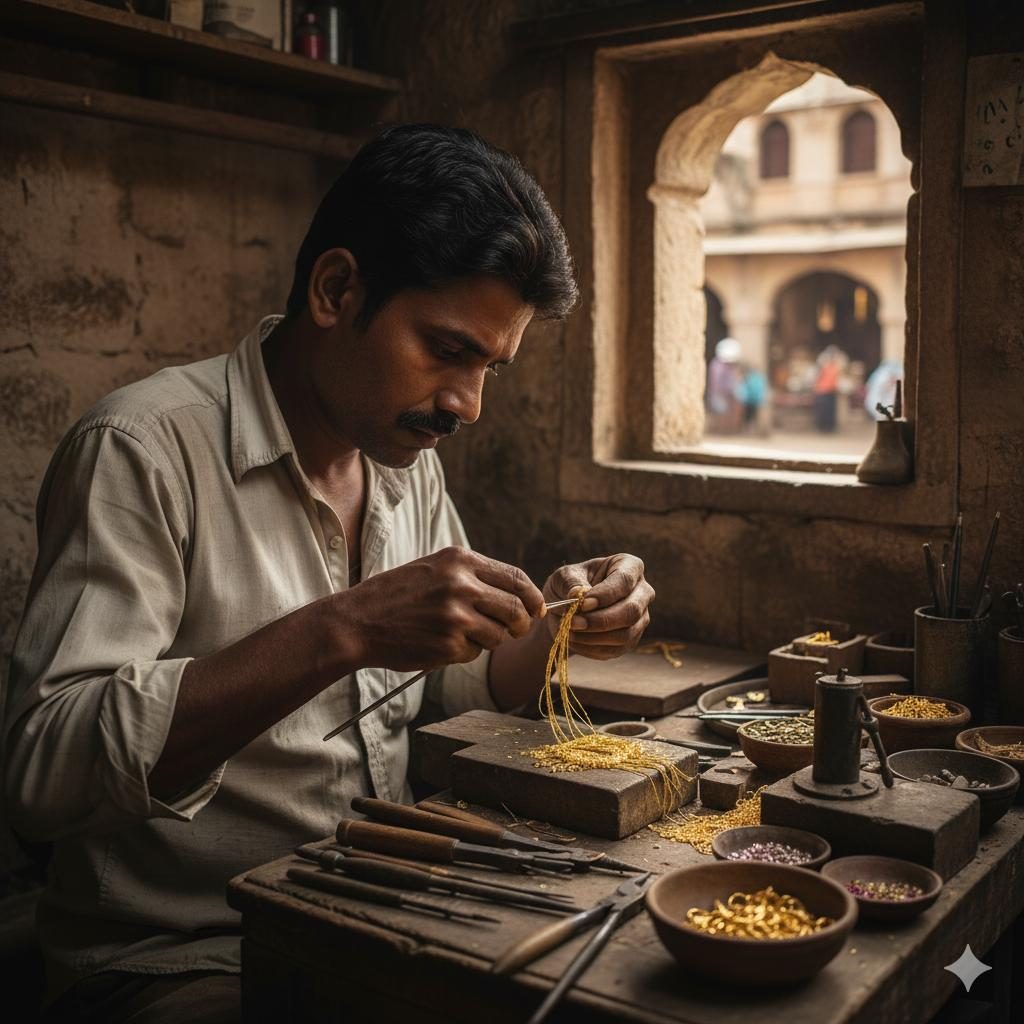
Once materials reach manufacturing, the conditions shift again. In large-scale production environments, particularly those supplying fast fashion and low-cost jewelry markets, efficiency becomes the primary driver. Pieces are produced quickly, often in high volumes, with processes designed to minimize time and cost.
This speed has consequences. Work can be repetitive, highly controlled, and physically demanding. In some cases, workers operate within systems where wages are low, hours are long, and oversight is limited. Materials used in cheaper jewelry may also introduce additional concerns, including exposure to substances that require careful handling. The result is a product that appears simple, but is shaped by complex and often compressed labor conditions.


The illusion of affordability
Low-cost jewelry is often framed as accessible, an entry point into style, an affordable way to participate in trends. But affordability, in this context, is rarely neutral. When a piece is sold at a price that seems disproportionately low relative to its material or appearance, the difference is accounted for somewhere along the chain. It may be reflected in lower wages, reduced safety standards, or the use of materials and processes that prioritize cost over durability.
This does not mean that all affordable jewelry is produced under poor conditions, but it does mean that price alone cannot be separated from production. What is inexpensive at the point of purchase may carry hidden costs that are not immediately visible.
Between transparency and opacity
In response to these realities, there has been a growing emphasis on transparency within the jewelry industry. Some brands have begun to trace their materials more carefully, working with suppliers who adhere to specific labor and environmental standards. Certifications, sourcing disclosures, and smaller-scale production models offer alternatives to opaque systems.
At the same time, transparency is not always consistent. Supply chains are often complex, crossing multiple regions and involving numerous intermediaries. Tracing a single piece from origin to market can be difficult, and not all brands have the same capacity or incentive to do so.
This creates a landscape where information is uneven. For the consumer, understanding the full story behind a piece of jewelry requires more than surface-level knowledge.
Responsibility without simplification
It is easy to frame this issue in binary terms: ethical versus unethical, responsible versus irresponsible. But the reality is far more complex. Jewelry production supports livelihoods across multiple regions, including communities where mining and craftsmanship are essential sources of income. The challenge is not simply to reject entire systems, but to understand how they function, where imbalances exist, and how they can be addressed. This requires a shift in perspective. From asking only what something is, to asking where it comes from.
Jewelry has always carried meaning. But that meaning is not limited to design, material, or symbolism. It also includes the conditions under which it was created: the labor that shaped it, the environments it passed through, and the systems that determined its value. To wear jewelry is, in some sense, to carry part of that history. Not always visibly, not always fully understood, but present nonetheless. And perhaps the question is not whether that history exists, but whether we choose to see it.




 Line
Line
 WhatsApp