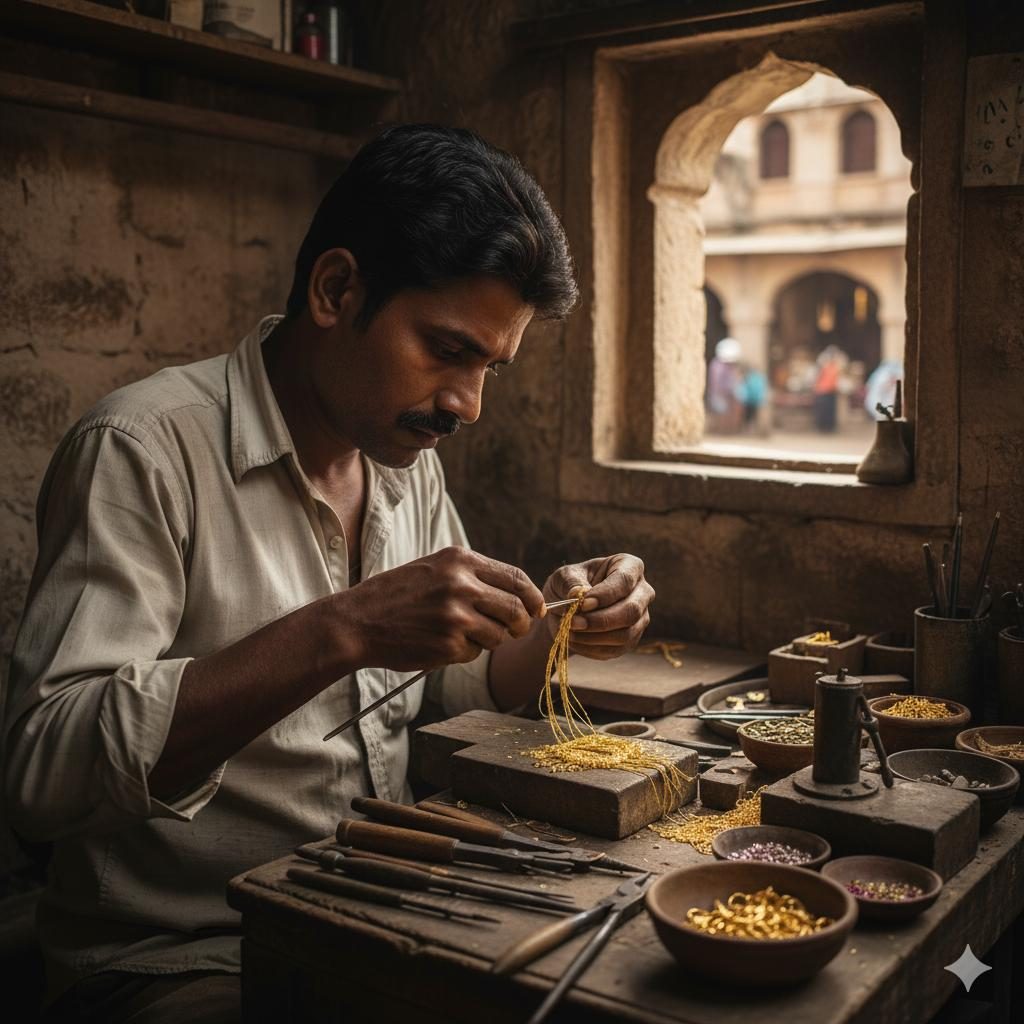
Cultural significance does not guarantee economic viability — and the craft is disappearing because of it.
Why fair pay is an existential question for traditional jewelry
A craft that survives on time
Traditional jewelry has never been fast. It is built through repetition, patience, and an understanding of material that is acquired over years, often decades. Techniques are not learned quickly, nor are they easily replicated. They are passed down through observation, correction, and time, shaped as much by discipline as by skill.
And yet, the conditions required to sustain this kind of work are increasingly difficult to maintain. Because while the craft depends on time, the systems surrounding it increasingly reward speed.
The imbalance between labor and value
The value of jewelry, particularly in global markets, is often determined by factors that extend far beyond the labor that produced it. Brand positioning, retail environment, and perceived prestige can significantly increase price, while the compensation for the artisan responsible for the work remains relatively unchanged. This creates a gap, one in which the visible value of the object does not correspond to the value of the labor behind it.
For artisans, this gap is not abstract. It is experienced directly, in the form of wages that do not reflect the time required to produce the work, or the level of skill necessary to do so. As production cycles shorten and market expectations shift, the pressure to produce more in less time increases.
The craft remains the same. The conditions around it do not.
Generational knowledge under strain

Traditional jewelry practices are often sustained through generational transmission.
Skills are passed from master to apprentice, from parent to child, through systems that rely on continuity and long-term commitment. This model assumes that the craft will remain viable, that it can support those who dedicate themselves to it. But when wages fail to keep pace with living costs, that assumption begins to break.
Younger generations, faced with limited financial stability, are less likely to enter or remain in the field. The decision is not a rejection of the craft, but a response to its conditions. Over time, this leads to a gradual erosion of knowledge. Not through sudden loss, but through absence.
The pressure of modern production
At the same time, advances in manufacturing have introduced alternatives that prioritize efficiency. Machine-assisted production allows for consistency, speed, and scalability, qualities that align with current market demands. In contrast, traditional methods require time, variation, and individual attention.
This creates a structural disadvantage. When consumers are presented with similar-looking products at significantly different price points, the distinction between handmade and mass-produced is not always visible. Without that distinction, the justification for higher cost becomes less clear. And without higher cost, sustainable wages become difficult to maintain.
Sonam Kapoor: visibility without infrastructure
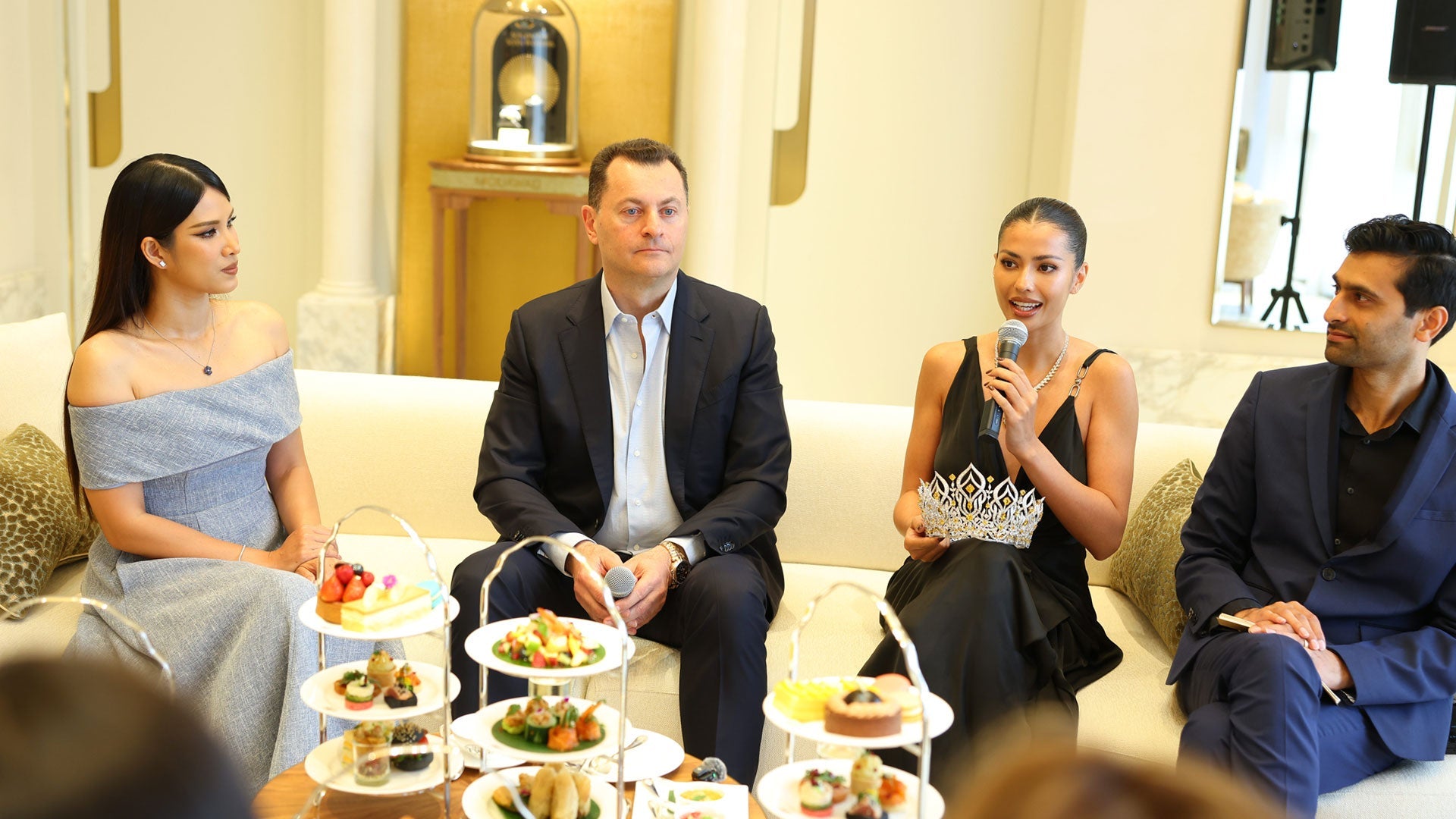
Public figures and cultural platforms have, in some cases, brought renewed attention to traditional jewelry practices. Sonam Kapoor, for example, has frequently incorporated heritage jewelry into both editorial and red carpet contexts, highlighting the visual richness and historical depth of these pieces.
But visibility alone does not resolve structural issues. While such moments can generate interest and appreciation, they do not necessarily translate into improved conditions for the artisans themselves. Without changes in how value is distributed across the supply chain, recognition remains largely symbolic. The craft is seen but not always sustained.
When preservation becomes unsustainable
There is often an assumption that traditional crafts will endure simply because they are culturally significant. But cultural significance does not guarantee economic viability.
When artisans are unable to sustain themselves through their work, the craft becomes increasingly difficult to maintain. Workshops close, apprenticeships diminish, and techniques that once required generations to develop risk being lost. This process is rarely immediate. It unfolds gradually, as fewer individuals choose to continue the work, and fewer opportunities exist for them to do so.
The question of fair pay
At the center of this issue is not only the survival of a craft, but the question of what that craft is worth. Fair pay is not simply a matter of compensation. It is a condition for continuity.
Without it, the time required to produce traditional jewelry becomes economically unviable. The knowledge embedded within the craft becomes difficult to transmit. The work itself becomes unsustainable. This shifts the conversation from preservation to possibility. Can traditional jewelry continue to exist in a system that does not support the labor it requires?
Beyond aesthetics
Jewelry is often discussed in terms of design, material, and symbolism. But traditional jewelry carries an additional layer, one that is less visible, but equally significant. It embodies processes that cannot be accelerated without loss, and knowledge that cannot be replaced once it disappears. To engage with these pieces is not only to engage with their form, but with the conditions that made them possible. The houses in our brand roster are built on exactly this kind of labor.
The future of traditional jewelry does not depend solely on appreciation. It depends on whether the systems surrounding it can support the labor that sustains it. Because when wages fail to reflect the value of the work, the craft does not simply diminish, it becomes untenable. And when a craft becomes untenable, it does not disappear all at once. It fades, until there is nothing left to continue.
Related reading: The hands behind the gem and A diamond isn’t born brilliant. It’s made that way.




 Line
Line
 WhatsApp