The environmental debt no one talks about at the point of sale
The part of the story that isn’t displayed
By the time a diamond reaches a display case, its origin is almost impossible to imagine. It appears contained, finished, and removed from the process: a polished surface under controlled light, presented without reference to the conditions that brought it there. Its value is framed through clarity, cut, and brilliance, while the landscape it came from remains absent from the narrative. And yet, that landscape does not disappear when the diamond is removed.
It remains altered, because extraction does not end with the stone.
The scale of removal
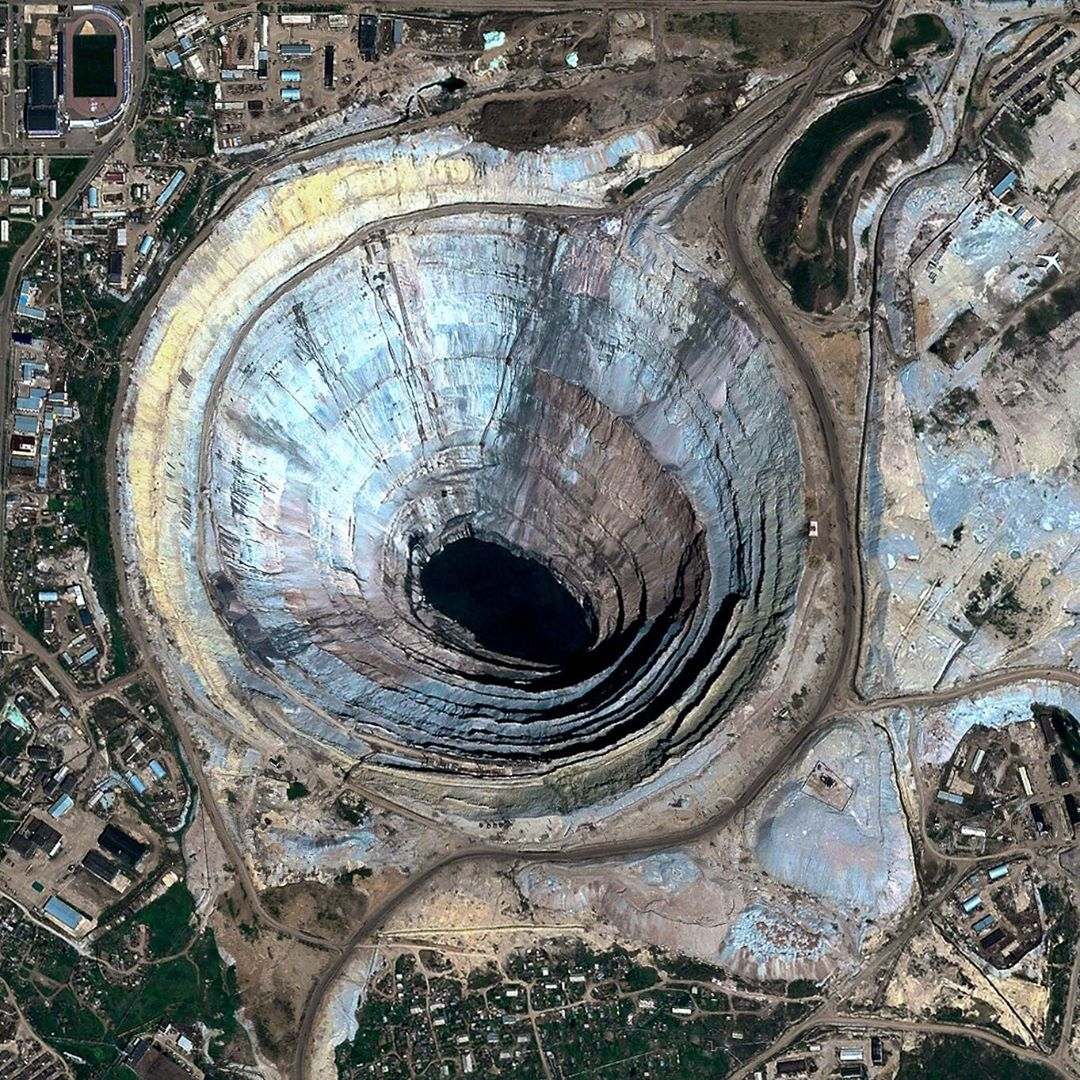
Diamond mining operates at a scale that is difficult to reconcile with the size of the final object. To reach diamond-bearing material, vast amounts of earth must be displaced. Layers of soil and rock are removed, often over large surface areas, creating open pits that extend deep into the ground. The volume of material extracted far exceeds what is ultimately recovered.
For every diamond that enters the market, there is an accumulation of material that does not. This imbalance is structural, the stone is small and the process that retrieves it is not.
Landscapes that do not return
Once mining operations conclude, the land does not immediately recover. Vegetation that has been removed does not reappear at the same pace. Soil composition changes, water flow is disrupted, and ecosystems that once existed in balance are altered in ways that can persist for years, sometimes decades.
In some cases, efforts are made to rehabilitate the land, reshaping terrain and reintroducing plant life. But restoration is not equivalent to reversal. What is rebuilt is not identical to what was there before. The absence remains, even when it is no longer visible at first glance.

Water, energy, and residue
Beyond physical alteration of land, diamond mining involves the use of water and energy at significant levels. Water is required to process extracted material, separating diamonds from surrounding rock. In doing so, fine particles and residual substances accumulate, often stored in tailings, large deposits of waste material that must be managed over time.
If not carefully contained, these materials can affect surrounding water systems, altering quality and flow. Even with regulation, the management of these byproducts remains an ongoing responsibility. Energy use further contributes to the environmental footprint, as machinery, transport, and processing all require sustained input. The diamond itself does not retain this history, but it is part of it.
The distance between origin and perception
At the point of sale, none of this is immediately visible.
The environment in which diamonds are presented is designed to emphasize clarity, refinement, and value. The language used focuses on quality, not origin. The experience is controlled, distanced from the conditions of extraction.
This distance shapes perception. The diamond is understood as an object, not a process. Its presence is immediate while its history is not.
Environmental cost without a price tag
Unlike the measurable attributes of a diamond (its cut, color, clarity, and carat), the environmental cost of extraction is not easily quantified at the point of purchase.
It does not appear on a label nor is reflected in a grading report. And yet, it exists. The alteration of land, the use of resources, and the management of waste all contribute to a form of environmental debt, one that is carried forward, rather than resolved at the moment of extraction. This debt is not assigned to a single object, but distributed across systems.

Between necessity and responsibility
It would be inaccurate to suggest that all diamond mining operates under identical conditions. There are differences in regulation, scale, and environmental management across regions and operations. Some efforts have been made to reduce impact, improve restoration practices, and increase transparency within the industry.
At the same time, the fundamental reality remains. Extraction changes the environment. The question is not whether impact exists, but how it is addressed, and how it is understood.
What remains
After the diamond is removed, what remains is not emptiness. It is a landscape that has been reshaped, a system that has been altered, and a process that continues to exist beyond the moment of extraction. These changes do not accompany the diamond physically, they are left behind. But they are part of the object’s history nonetheless.
Diamonds are often described in terms of what they are: brilliant, rare, enduring. Less often are they described in terms of what they leave behind. The environmental cost of extraction does not disappear when the stone is polished, nor does it become irrelevant once the diamond enters the market. It remains, embedded not in the surface of the object, but in the conditions that made it possible. And while that cost may not be visible at the point of sale, it is no less present.








 Line
Line
 WhatsApp