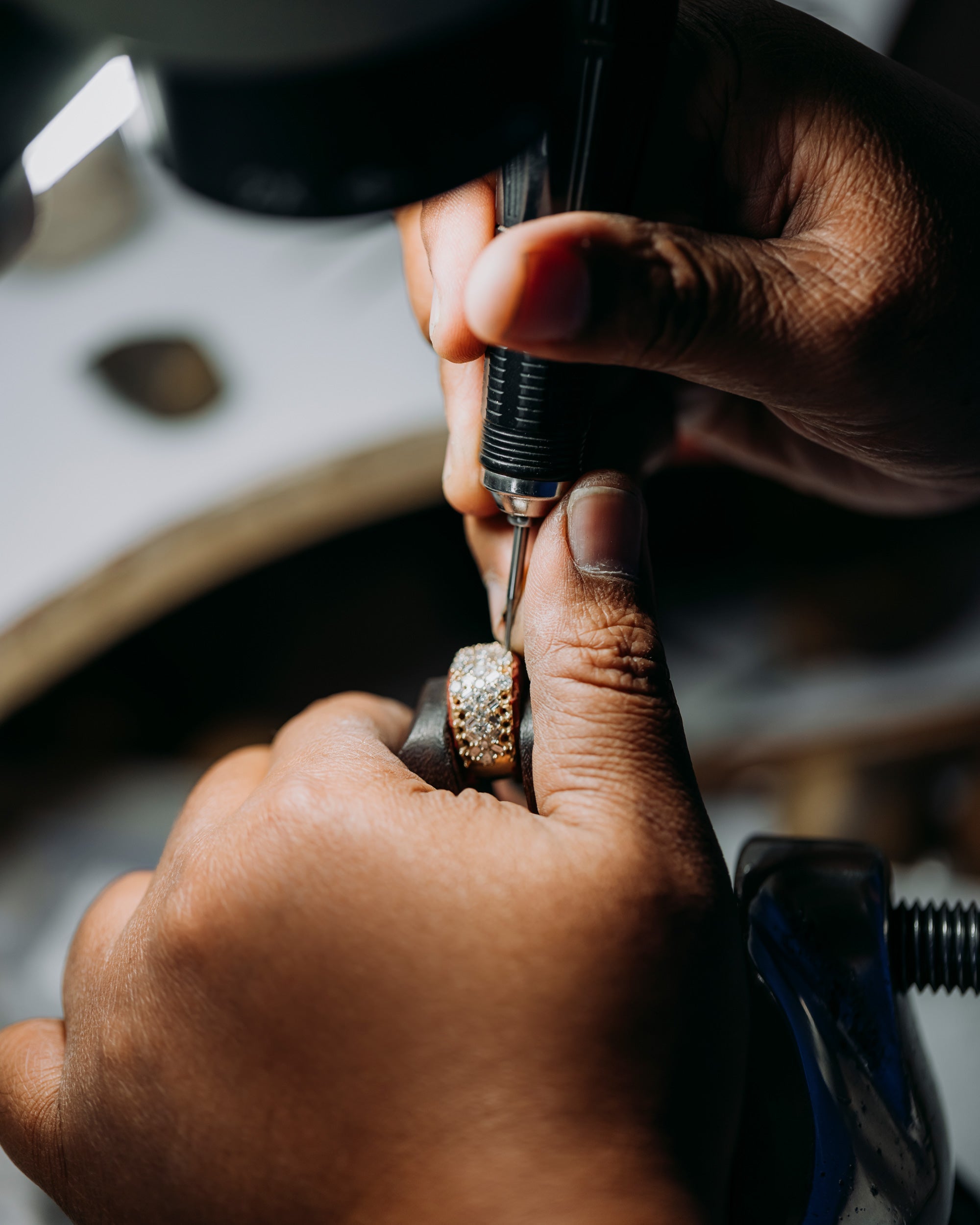
A strategic decision, not a logistical task
Of all the decisions a jewelry brand founder will make in the early stages of building their company, few carry more long-term consequence than the choice of manufacturing partner. And yet it is consistently among the most underestimated, approached with less rigour than the design process, less strategy than the brand identity work, and far less time than either deserves.
The results of that underestimation are visible everywhere in the industry. Inconsistent quality across collections. Pieces that look nothing like the samples approved months earlier. Minimum order quantities that quietly strangle a young brand’s cash flow. Launch timelines that slip by weeks, then months, while an audience’s excitement quietly dissipates. These are not bad luck stories. They are the predictable consequences of a manufacturing decision that was made too quickly, with too little information, against the wrong criteria.
Choosing the right manufacturing partner is not a logistical task. It is one of the most important strategic decisions your brand will make.
What most founders get wrong before they even start looking
The most common mistake founders make is beginning the search for a manufacturer before they have defined what they actually need from one. They approach the process as a procurement exercise, find a factory, compare prices, place an order, rather than as the beginning of a relationship that will shape every physical product their brand produces.
Before evaluating a single manufacturer, a jewelry brand founder needs clarity on several things: the materials and construction techniques their aesthetic requires, the price point their positioning demands, the order volumes they can realistically sustain in their first year, the quality standards they are genuinely unwilling to compromise on, and the communication style and responsiveness their working style requires. Without that clarity, it is impossible to evaluate whether any given manufacturer is actually the right fit or simply an available option.
The right manufacturing partner for your brand is not the cheapest option, or the fastest, or even the most technically accomplished. It is the one whose capabilities, culture, and working practices align with what your specific brand needs to become.
Why geography matters more than most people realise
The global jewelry manufacturing landscape is not homogeneous. Different regions have developed deep expertise in different materials, techniques, price points, and production scales, and understanding those distinctions is essential to finding a partner whose capabilities actually match your brand’s requirements.
Switzerland has long been synonymous with precision engineering and watchmaking, but its influence on fine jewelry manufacturing is equally significant. Swiss manufacturers bring a level of technical rigour and quality control to precious metal work that is difficult to replicate elsewhere. For brands positioned at the upper end of the fine jewelry market, where tolerances are unforgiving and craftsmanship is a core part of the value proposition, Switzerland represents a standard that very few other manufacturing regions can match.
Italy, and the Tuscany and Vicenza regions in particular, carries centuries of goldsmithing tradition. Italian manufacturers combine heritage craft techniques with a sophisticated understanding of contemporary design, making them particularly well suited to brands where aesthetic refinement and design sensitivity are central to the identity. There is also a cultural fluency in Italian manufacturing around what luxury actually means at the product level that is genuinely difficult to find elsewhere.
Japan brings something different again: an extraordinary precision in finishing, a deeply ingrained culture of quality that operates at every level of the production process, and particular expertise in certain materials and techniques, including some of the world’s finest work in metalwork and gem setting, that make Japanese manufacturers the right choice for brands where technical perfection and understated excellence are the defining characteristics.
Thailand, and Bangkok specifically, has become one of the most important gemstone and fine jewelry manufacturing hubs in the world. With deep expertise across a wide range of precious and semi-precious stones, strong capabilities in both traditional and contemporary setting techniques, and production infrastructure that can serve brands from early-stage to significant scale, Thailand offers a combination of quality and flexibility that makes it an excellent fit for a wide range of brand positioning and price points.
Understanding this landscape, knowing not just that these regions exist, but what each one is genuinely best positioned to deliver, is what allows a brand to make a manufacturing decision based on fit rather than availability.
The six questions that actually matter when evaluating a manufacturer
Beyond geography and general reputation, there are six questions that should anchor every manufacturer evaluation a jewelry brand founder undertakes.
1. Can they actually produce what your brand requires?
Samples are the only honest answer to this question. Not portfolios, not references, not factory tours, samples of pieces that are as close as possible to what you intend to produce. The gap between what a manufacturer claims to be capable of and what they can consistently deliver at production volumes is often significant. Evaluate samples with the same rigour you would apply to a final product, because the sample is your most accurate window into what your customer will eventually hold in their hands.
2. How do they handle quality control?
Quality control in jewelry manufacturing is not a final inspection step. It is a process that runs through every stage of production, from material sourcing through to finishing and packaging. Ask a prospective manufacturer to walk you through their quality control process in detail. Listen for specificity: vague answers about “high standards” are meaningless. What you are looking for is a documented, systematic approach to quality at each stage of production, and evidence that deviations from standard are caught and addressed before they reach the finished product.
3. What are their minimums, and are they honest about scalability?
Minimum order quantities are one of the most significant practical constraints a young jewelry brand faces. A manufacturer whose minimums are beyond what your first-year volumes can support is not the right partner at this stage, regardless of how impressive their capabilities are. Equally important is understanding how a manufacturer scales: can they grow with your brand, or will you face a disruptive transition to a new production partner at exactly the moment your brand is gaining momentum?
4. How do they communicate, and how quickly?
This question is more important than it sounds. The production of a jewelry collection involves dozens of decision points, material approvals, sample reviews, adjustments, timeline confirmations, and a manufacturing partner who is slow to respond or unclear in their communication creates compounding delays and uncertainty that damage your ability to plan and execute. Communication style and responsiveness should be evaluated from the very first interaction, not assumed to improve once a relationship is established.
5. What is their approach to intellectual property?
Your designs are your brand’s most valuable creative asset. Before entering into any production relationship, understand clearly how a manufacturer handles the intellectual property of the brands they work with. What protections are in place? What prevents your designs from appearing in another brand’s collection? These are not uncomfortable questions, they are standard due diligence, and any manufacturer with genuine experience working with independent brands will be accustomed to addressing them.
6. Do they understand your brand, or just your order?
The most productive manufacturing relationships are ones where the manufacturer has a genuine understanding of what a brand is trying to achieve, not just the specifications of an individual order. A partner who understands your positioning, your quality standards, and your long-term direction can bring judgment and expertise to the production process in ways that a purely transactional supplier cannot. This is the difference between a manufacturing partner and a manufacturing vendor.
The relationship is the asset
It is worth saying clearly: the best manufacturing relationships in the jewelry industry are not found quickly. They are built carefully, over time, through consistent communication, mutual accountability, and a shared investment in the quality of the work. Brands that approach their manufacturing relationships transactionally, moving between suppliers based on price or availability, consistently produce less consistent work and face greater operational risk than brands that invest in developing genuine partnerships with the right producers.
The goal is not to find the best manufacturer in the world. The goal is to find the best manufacturing partner for your specific brand, at your specific stage, with your specific requirements — and to build a relationship with them that becomes a genuine competitive advantage as your brand grows.
“The most durable jewelry brands are almost always built on manufacturing relationships that were chosen with the same care and strategic intention as the brand’s creative direction. The product is the brand’s most powerful marketing asset. Treat the decision accordingly.”
At JC Studio, our manufacturing networks are built deliberately over time to ensure that each brand we work with is matched to the production partner whose capabilities, culture, and working practices are genuinely aligned with what that brand needs to become. Finding the right match is one of the first things we do with every founder we work with, and it is one of the decisions that has the most lasting impact on what the brand is able to build. If you are at the stage of making that decision and want to understand the landscape more clearly, send us a message — we’d love to help you.




 Line
Line
 WhatsApp