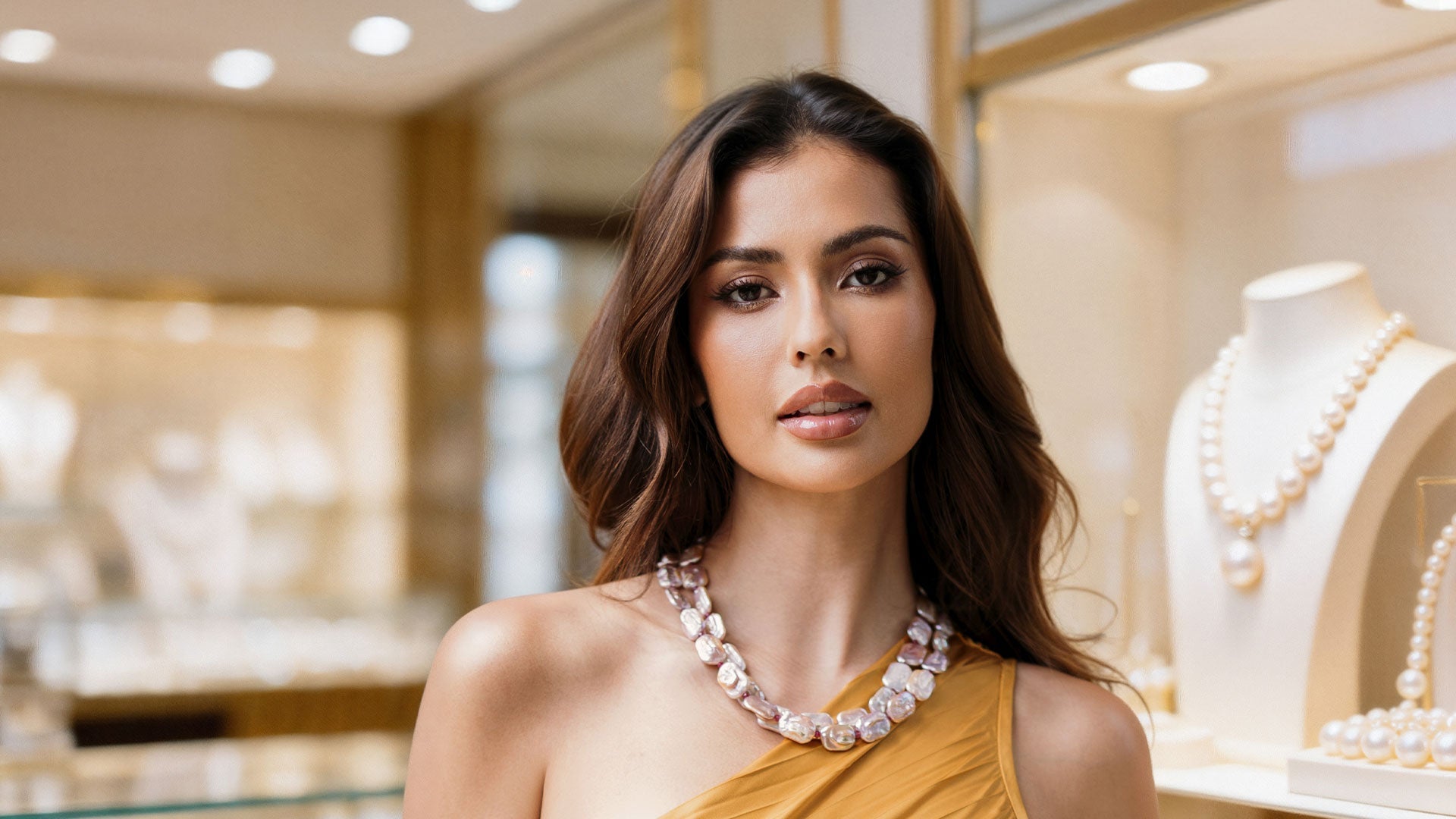
From audience to brand, from collection to company
There is a pattern that has become so common in the jewelry industry that it now has its own quiet reputation. An influencer, someone with a genuine following, real trust, and proven taste, announces a jewelry collection. The audience responds with excitement. The launch generates strong initial sales. And then, within a year, the collection fades. The influencer moves on. The jewelry is forgotten.
This is not a story about failure, but one about a missed opportunity and understanding why it keeps happening is the first step toward doing something different.
The problem, stated plainly, is this: most influencers launch jewelry as merchandise. They create a product that their audience can buy as an extension of their fandom, rather than building a brand that their audience can believe in as an independent entity. The distinction sounds subtle. The consequences are not.
Merch or brand, and why it matters more than you think
Merchandise is transactional. It exists because of who made it, not because of what it stands for. It sells on proximity to a person rather than on the strength of an identity. When the cultural moment that produced it passes, and all cultural moments pass, there is nothing underneath to sustain it.
A brand is something different. A brand has a point of view that exists independently of any individual moment or platform. It has an aesthetic logic that customers can understand and trust. It occupies a position in the market that is genuinely its own. And crucially, it can outlast the founder’s personal relevance in any given season.
The influencers who have successfully built jewelry brands, not collections, but actual brands, understood this distinction before they launched. The ones who treated jewelry as an extension of their content strategy almost always end up in the same place: a flash of sales followed by silence.
Why influencers are actually uniquely positioned to build great jewelry brands
Before going further, it is worth saying something that often gets lost in this conversation: influencers start with genuine advantages that most jewelry entrepreneurs would spend years trying to acquire. They have an audience that already trusts them. They have demonstrated taste, often across years of content, that their followers have actively chosen to follow. They understand how to communicate visually and emotionally in ways that traditional brand builders often struggle to replicate. And they have distribution: when they are ready to launch, they have a direct line to the people most likely to respond.
These are not small advantages. They are the foundations on which extraordinary jewelry brands can be built. The question is not whether influencers have what it takes. The question is whether those assets are being deployed against a real brand strategy or simply used to sell a product.
The four mistakes that turn a brand into merch
1. Leading with your name instead of your vision
When a jewelry line is named after the influencer, branded around their initials, and marketed entirely through their personal channels, it is structurally dependent on that person’s ongoing relevance. The moment their audience shifts attention elsewhere, to a new platform, a new personality, a new cultural obsession, the brand has no independent gravity to hold them. The most durable influencer-founded brands are ones where the founder’s identity informed the brand without becoming the brand. The aesthetic might be unmistakably them. The values might reflect everything they have built their platform around. But the brand can be understood, appreciated, and purchased by someone who has never seen their content.
2. Designing for the moment instead of for the customer
Influencer-led collections often reflect what is currently performing well in the creator’s content, the aesthetic of their most recent campaign, the vibe of their current era. This creates an inherent tension: the jewelry captures a moment that, by the time production is complete and the product is in customers’ hands, has already begun to pass. Great jewelry brands are not designed around a moment. They are designed around a customer, a specific person, with specific values and tastes, who will still find the pieces relevant two or five or ten years from now. The best influencer-founded jewelry brands are built around a deep understanding of who that customer actually is, separate from who is currently following on social media.
3. Treating manufacturing as a commodity
Speed to market is not a virtue in fine and semi-fine jewelry. And yet the pressure to capitalize on an audience’s current attention, to launch while the excitement is high, leads many influencer-founded brands to approach manufacturing as a logistical problem to be solved quickly rather than a strategic decision to be made carefully.
The result is often inconsistent quality, pieces that do not match the imagery used to sell them, and customer experiences that erode exactly the trust that made the influencer valuable in the first place. An audience that already trusted you will feel the disappointment of a product that does not meet expectations more acutely, not less, than a cold customer discovering a brand for the first time.
4. Stopping at the launch
A product launch is a marketing event. A brand launch is the beginning of a much longer process of positioning, storytelling, and relationship-building with customers. Many influencer-founded jewelry lines invest everything in the launch moment and have no plan for what comes after: how the brand evolves, how new collections are introduced, how the brand communicates when there is no new product to announce.
Brands that endure are in constant conversation with their audience, not just when they have something to sell. The influencers who successfully build jewelry companies are the ones who treat post-launch brand building with the same seriousness they bring to their content strategy.
“An audience is an asset. But an audience alone cannot make a brand. What converts attention into equity is a point of view that exists beyond any single moment, platform, or campaign.”
What building a real jewelry brand actually looks like
The influencers who have made the transition from creator to brand founder share a few characteristics that are worth examining closely.
They started with positioning before they started with the product. They defined what their brand stood for, what it believed about jewelry, about the women who wear it, about the role of adornment in a life lived with intention, before they designed a single piece. That foundation gave every subsequent decision a logic that held together.
They invested in manufacturing relationships, not just manufacturing. They found partners who understood their quality standards and their aesthetic, and they built genuine relationships with those partners before production began. They understood that the product is ultimately the most important marketing asset they have, and they treated it accordingly.
They thought about the brand five years out, not five months out. What does this brand look like when I am less active on social media? What does this brand look like when tastes shift? What does this brand look like when a customer who has never heard of me discovers it through a friend, or a boutique, or a magazine? A brand that can only answer those questions by pointing back to the founder’s personal platform is not yet a brand.
And they sought out the expertise they did not have. Building a jewelry brand requires knowledge across domains — design development, manufacturing, brand architecture, pricing strategy, launch, that very few people possess in full. The most successful influencer-founded jewelry companies are built by people who knew precisely where their expertise ended and actively sought out partners who could fill the gaps.
The opportunity is real. The window is narrower than it looks.
The jewelry industry is one of the few categories where an influencer’s audience advantage can translate directly into genuine brand equity, if the foundation is built correctly. Consumers trust the people they follow. That trust, when channelled into a brand with real positioning and real quality, can become something that lasts far beyond any individual content cycle.
But the window for getting it right is narrower than it looks. An audience’s patience for a product that does not meet their expectations is limited. A reputation for launching merchandise rather than building brands is easy to acquire and difficult to shed. The first collection sets a standard, and it is far easier to build on a strong foundation than to correct a weak one.
The influencers who will build the jewelry brands of the next decade are the ones making that distinction clearly, right now, before they design a single piece. They understand that their audience is an extraordinary starting point, and that a starting point, however powerful, is only the beginning.
At JC Studio, we work with public figures and creators who are ready to make that transition, from audience to brand, from collection to company. The process is structured, the timeline is focused, and the outcome is something that can stand on its own long after any single campaign has run its course. If that is the kind of brand you want to build, we would love to talk to you.



 Line
Line
 WhatsApp